

What Does IRA Eligible Gold Mean? (The Quick Answer)

What does ira eligible gold mean is simple to define: it refers to physical gold that meets strict IRS standards — primarily a minimum purity of 99.5% (0.995 fineness) — allowing it to be held inside a tax-advantaged Individual Retirement Account.
Here's what qualifies at a glance:
| Requirement | Standard |
|---|---|
| Minimum gold purity | 99.5% (0.995 fine) |
| Eligible forms | Coins, bars, rounds |
| Storage | IRS-approved depository only |
| Exception | American Gold Eagle (91.67% purity, still approved) |
| Ineligible items | Jewelry, collectibles, numismatic coins |
Most people don't realize the IRS places tight restrictions on which gold can enter a retirement account — and buying the wrong type can trigger immediate taxes and penalties.
Gold is not just a timeless store of wealth. As of April 2026, gold prices have surged past $3,300 per ounce, outpacing the S&P 500 and drawing serious attention from retirement investors looking to protect their purchasing power against inflation and economic uncertainty. More Americans are asking whether their retirement savings are working hard enough — and physical gold, when held correctly inside an IRA, can be a powerful answer.
But "correctly" is the key word. The IRS draws a hard line between investment-grade bullion and collectibles, and getting that wrong is an expensive mistake.
I'm Eric Roach — a former investment banker and M&A advisor who has helped clients structure multi-billion-dollar portfolios on Wall Street, and who now helps everyday investors understand what does ira eligible gold mean in practical, penalty-free terms. In this guide, I'll walk you through everything you need to know — from IRS purity rules to approved coins, storage requirements, and smart exit strategies.
Quick what does ira eligible gold mean terms:
- How to buy gold bullion
- Where to buy gold bars
- Investment grade gold bars
What Does IRA Eligible Gold Mean?
When we talk about Gold Ira Eligibility, we are navigating a specific set of rules laid out by the Internal Revenue Service (IRS). Under Internal Revenue Code (IRC) Section 408(m), most "collectibles" are prohibited from being held in an IRA. If you buy a collectible coin with your retirement funds, the IRS views that as a "distribution"—meaning they’ll send you a tax bill (and a 10% penalty if you’re under 59½) faster than you can say "solid gold."
However, there are specific exceptions for certain types of bullion. To understand How Physical Gold Is Ira Eligible, you have to look at the intent. The IRS allows gold that is intended as an investment vehicle rather than a collector's item. This means the value must be derived from the weight and purity of the metal itself, not its rarity, age, or historical significance.
Understanding the .995 Purity Standard for IRA Eligible Gold
The "gold standard" for, well, gold in an IRA is a minimum fineness of .995. In layman's terms, that is 99.5% pure gold. This is often referred to as 24-karat gold. If a bar or coin falls even slightly below this threshold—say, .900 or .917—it is generally disqualified.
This purity requirement isn't just a random number; it aligns with the standards used by major commodities exchanges like COMEX. When you're building your Ira Gold Silver Guide, while gold needs to be .995 pure, Silver Ira Eligible products actually require a higher fineness of .999.
The American Gold Eagle Exception
Now, if the IRS loves one thing more than rules, it's a specific statutory exception. Enter the American Gold Eagle. This coin is actually 22-karat gold, meaning it is only 91.67% pure (the rest is silver and copper to make the coin more durable).
By the .995 rule, it should be ineligible. However, because it is produced by the United States Mint and is legal tender, Congress made a special allowance for it. You can find more details in our Unlock Your Ira The Definitive Guide To American Silver Eagle Eligibility, which explains why these government-backed coins are the "safe bet" for many investors.
Approved Coins vs. Bars: Navigating Purity Requirements
When deciding what does ira eligible gold mean for your specific portfolio, you’ll likely choose between coins and bars. Both have their place, but they serve different psychological and practical needs.
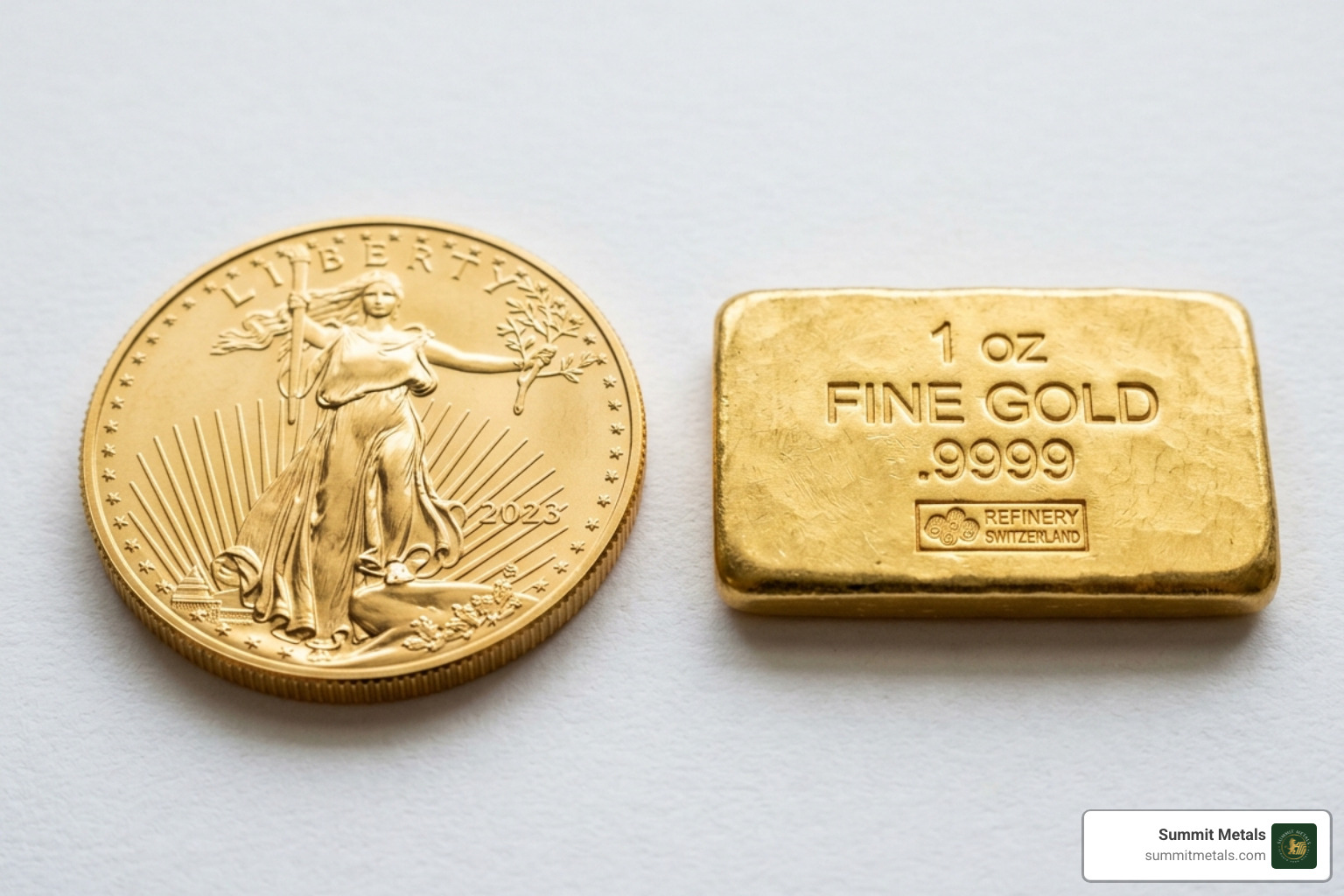
| Feature | Gold Coins | Gold Bars |
|---|---|---|
| Purity | .995+ (except Eagles) | .995+ |
| Legal Tender | Yes (usually) | No |
| Fraud Protection | High (harder to counterfeit) | Moderate (requires assay) |
| Premiums | Higher (minting costs) | Lower (bulk value) |
| Portability | High | Variable |
One major benefit of coins is their "face value." While a 1 oz Gold Buffalo has a face value of $50, its actual market value is thousands of dollars. However, that face value provides a layer of legal protection against fraud and makes them easily recognizable. Bars, on the other hand, are often the choice for those looking to get the most "melt value" for their dollar. Regardless of which you choose, you must adhere to the Gold Ira Rules to maintain your tax status.
Eligible Gold Coins and Bars for Your Portfolio
If you're ready to start Ira Investing In Gold, here are the heavy hitters that are widely accepted by custodians:
- American Buffalo: The first .9999 fine 24-karat gold coin from the U.S. Mint.
- Canadian Maple Leaf: Famous for its .9999 purity and advanced security features.
- Austrian Philharmonic: A beautiful European favorite that meets all purity standards.
- Australian Kangaroo: Produced by the Perth Mint, these are highly liquid and .9999 pure.
- Approved Bars: Brands like Valcambi Suisse, Credit Suisse, and Sunshine Mint are industry standards. These must be produced by an accredited refiner (ISO 9001, LBMA, or COMEX/NYMEX approved).
Prohibited Collectibles and Numismatics
This is where many investors trip up. Just because a coin is made of gold doesn't mean it's IRA-eligible. The IRS specifically prohibits "collectibles." This includes:
- Rare or Numismatic Coins: Coins valued for their rarity (like the 1933 Double Eagle) are out.
- Graded Items: If a coin is "slabbed" or graded by a third party like PCGS or NGC, many custodians will reject it because the price is inflated by its "condition" rather than its metal content.
- South African Krugerrands: These are 22-karat and do not have the special exception that American Eagles enjoy.
- Chinese Pandas: Often excluded due to varying mintage standards over the years.
To stay safe, always refer to The Ultimate Rulebook For Precious Metals Ira Investors before making a purchase.
The Mechanics of a Precious Metals IRA
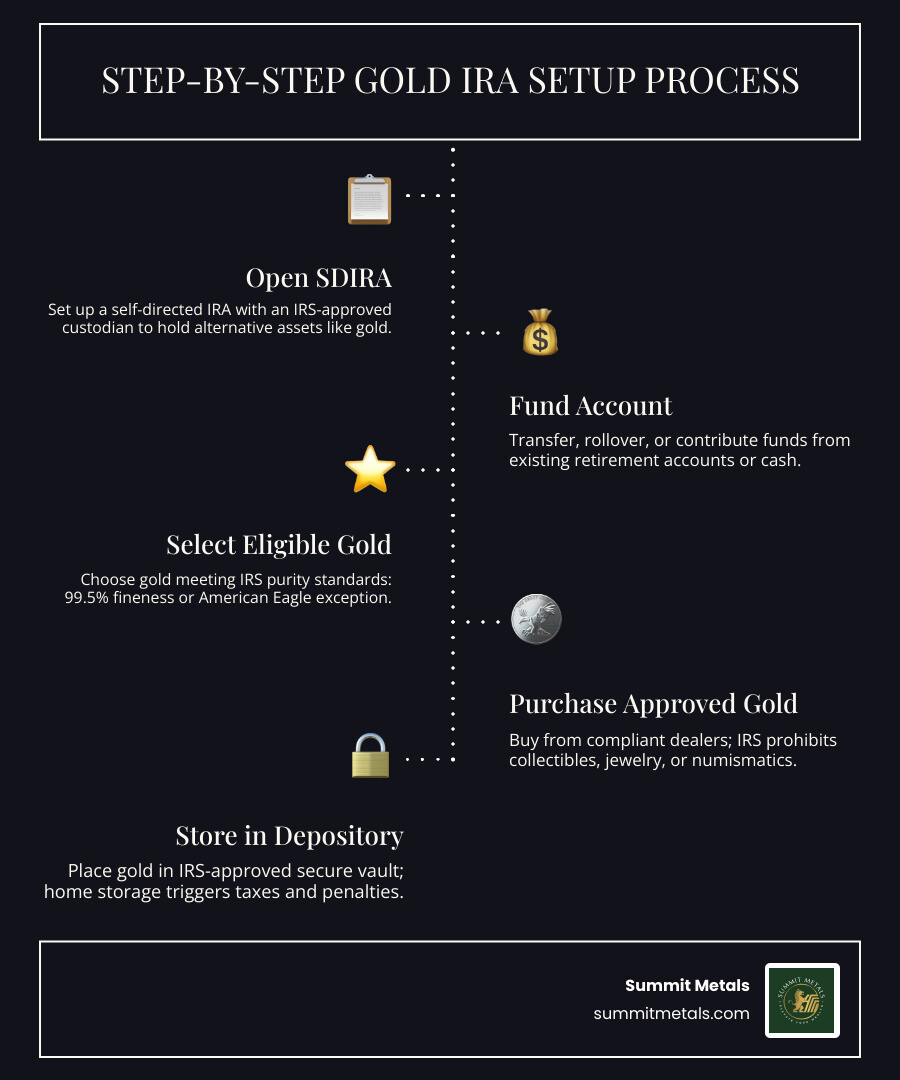
You can’t just buy gold and stick it in your regular E*TRADE or Fidelity account. To hold physical metals, you need a Self-Directed IRA (SDIRA). This is a special type of IRA that allows for alternative assets like real estate, private equity, and—of course—precious metals.
Setting up an SDIRA involves three main parties:
- The Investor (You): You make the decisions.
- The Custodian: An IRS-approved entity (usually a trust company) that handles the administration and reporting.
- The Dealer (Us): Where you actually buy the metal.
We’ve put together a guide on How To Open Gold Ira and Self Directed Gold Ira basics to help you navigate this paperwork-heavy process.
Custodianship and Storage for IRA Eligible Gold
One of the most frequent questions we get about what does ira eligible gold mean is: "Can I keep it in my safe at home?" The short answer is: No.
The IRS requires that IRA-owned gold be held by a qualified trustee or custodian and stored in an IRS-approved depository. These facilities are like Fort Knox—they feature biometric access, 24/7 surveillance, and armed guards. Furthermore, custodians must be insured by a fidelity bond of no less than $250,000 to protect your assets.
When choosing a storage method, you’ll encounter two terms:
- Commingled Storage: Your gold is stored in a large bin with other people's gold of the same type.
- Segregated Storage: Your specific coins or bars are kept in a separate, dedicated space.
You can learn more about these facilities in our guide to Storing Your Shine A Guide To Irs Approved Precious Metals Depositories and check out Gold Ira Approved Depository standards.
Contribution Limits and Regulations in 2026
As of April 2026, the contribution limits for a Gold IRA are the same as traditional IRAs. For the 2024-2026 period, the annual limit is $7,000 for those under 50. If you are 50 or older, you can take advantage of a "catch-up" contribution, bringing your total to $8,000 per year.
If you are self-employed, a SEP Gold IRA allows for much higher limits—up to 25% of your compensation or $69,000 (based on 2024 data, adjusted for 2026). If you have an old 401(k) or traditional IRA, you can often perform a tax-free rollover to fund your gold account. Check out our guide on how to Unlock Your Retirements Potential A Guide To Gold Ira Transfers for the step-by-step process.
Strategic Investing: Autoinvest and Exit Strategies
Investing in gold shouldn't be a "one and done" event. Most experts recommend allocating between 5% and 10% of your total portfolio to precious metals. This provides a "hedge"—when the stock market goes down, gold typically goes up (or at least holds its value).
At Summit Metals, we believe in making this easy through Autoinvest. Just like you contribute to a 401(k) every month, you can set up a "Dollar Cost Averaging" (DCA) strategy with us. This means you buy a set amount of gold every month regardless of the price. When prices are low, you buy more; when prices are high, you buy less. Over time, this lowers your average cost per ounce and takes the emotional stress out of "timing the market."
You can explore our Subscriptions services to see how easy it is to automate your wealth building.
Building Wealth with Autoinvest
Market volatility is the enemy of the retired mind. By using a monthly contribution model, you mitigate the risk of buying at a "peak." This 401(k)-style investing in physical assets is a cornerstone of Retirement Riches How Gold Iras Can Fortify Your Financial Future. It’s about consistency, not speculation.
Planning Your Exit: Liquidity and Private Vaults
An investment is only as good as your ability to sell it. This is why we emphasize an "exit strategy." When you store your gold in an IRS-approved depository, it remains "liquid." This means that when you’re ready to take a distribution, you can either have the physical metal shipped to you or—more commonly—sell it back to a dealer for cash.
At Summit Metals, we make this seamless. You can Sell to us directly from your vault storage. Because we know the chain of custody (we know exactly where that gold has been), the buyback process is fast and efficient. For more on securing your future, see Ira Gold Investment A Comprehensive Guide To Securing Your Future.
Frequently Asked Questions about IRA Eligible Gold
Can I store IRA eligible gold at home?
We can't stress this enough: No. Taking personal possession of your IRA gold is considered a distribution. The IRS will treat the entire value of the gold as taxable income for that year. If you're under 59½, you'll also owe a 10% early withdrawal penalty. While "home storage IRAs" are sometimes marketed online, the IRS has repeatedly challenged these in court. Don't get "custody napped"—read our guide on Dont Get Custody Napped Finding The Right Gold Ira Service.
What other metals are eligible for an IRA?
Gold isn't the only player in the game. You can also hold:
- Silver: Must be .999 fine (e.g., American Silver Eagles, Silver Maple Leafs). See Silver Ira Rules.
- Platinum: Must be .9995 fine.
- Palladium: Must be .9995 fine.
Other metals like rhodium or copper are currently not eligible for IRA inclusion.
How do I fund a gold IRA?
There are three main ways to get money into your account:
- Rollover: Moving funds from a 401(k) or 403(b) into your new IRA. You have 60 days to deposit the funds to avoid taxes.
- Transfer: A direct "trustee-to-trustee" transfer from an existing IRA. This is the cleanest and safest method.
- Cash Contribution: Simply writing a check or wiring funds, subject to annual contribution limits.
For a deeper dive, check out our Ultimate Checklist For Gold Ira Services Comparison.
Conclusion
Understanding what does ira eligible gold mean is the first step toward a more resilient retirement. By focusing on .995 purity, using approved custodians, and avoiding the "collectible" trap, you can harness the power of physical assets with the same tax benefits as a traditional stock portfolio.
At Summit Metals, we are based in Wyoming and serve investors across the country, including those in Salt Lake City, Utah. Our mission is simple: provide transparent, real-time pricing and high-quality, authenticated metals. Because we purchase in bulk, we are able to offer competitive rates that ensure you get the most value for your retirement dollar.
Whether you are looking to do a one-time rollover or want to start a monthly "Autoinvest" habit, we are here to help. Gold has survived every empire, every war, and every economic collapse in human history. Does your retirement plan have that kind of staying power?
Ready to add the Midas touch to your portfolio? Explore our DCA services and start building your golden future today.


