

Copper Is Making Investors Pay Attention — But Should You?
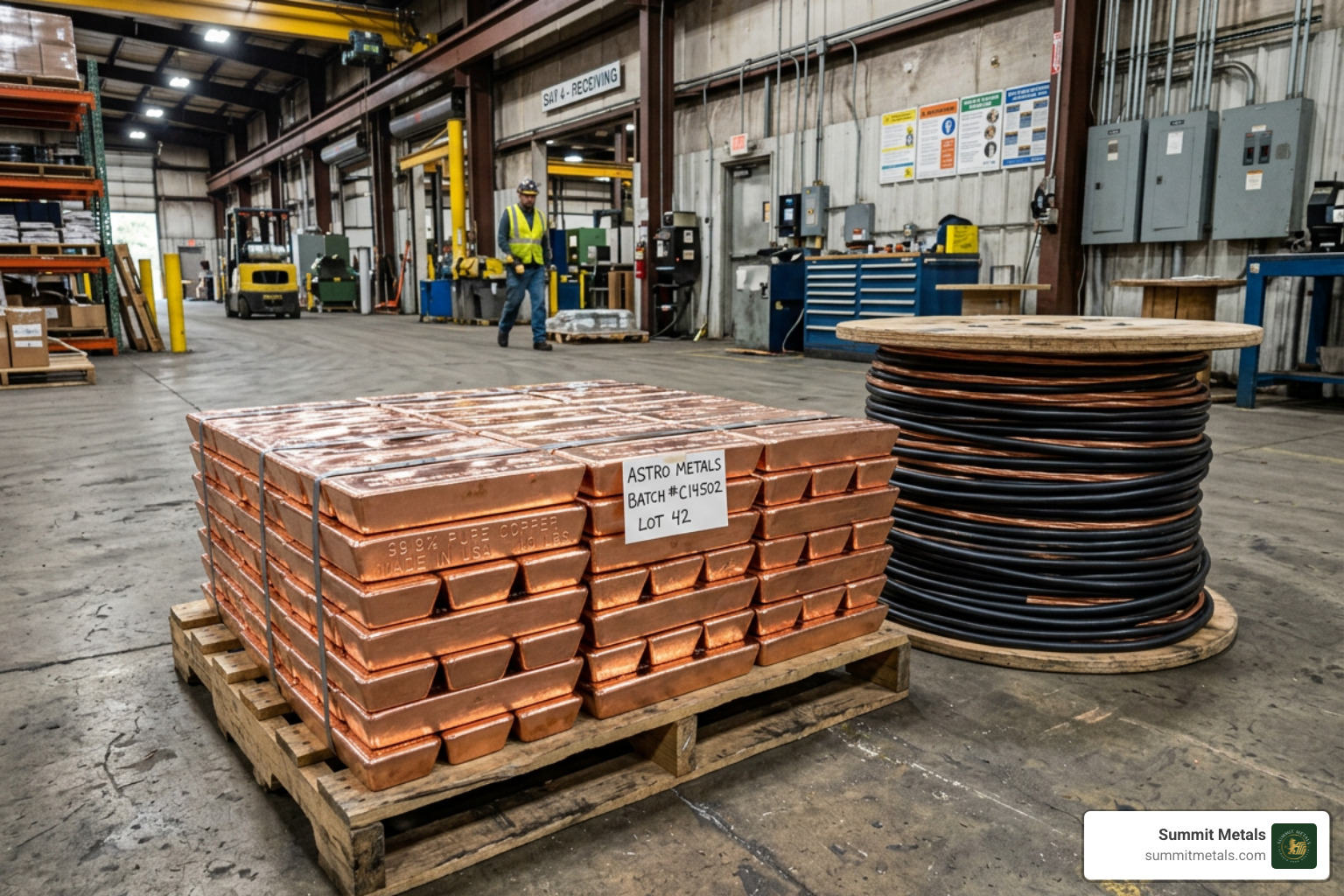
Is copper a good investment? The short answer depends on how you invest in it.
Here is a quick breakdown:
| Investment Method | Good for Most Investors? | Key Watch-Out |
|---|---|---|
| Physical copper bullion | Cautiously, with care | High premiums over spot price |
| Copper ETFs (e.g., CPER) | Yes, for market exposure | Futures mechanics erode returns |
| Copper mining stocks | Yes, for growth seekers | Volatile, many factors beyond copper price |
| Copper futures | No, for most retail investors | Complex, high risk, margin requirements |
| Physical scrap copper | Niche only | Logistics, storage, low margins |
The bottom line: Copper has genuine long-term demand tailwinds from electric vehicles, renewable energy, and AI data centers. But the way you gain exposure matters enormously. Whether you are buying individual bars or using our Autoinvest program to dollar-cost average into your position monthly—much like a 401k—the strategy you choose dictates your success. Buying physical copper bullion at a 400% markup over its actual melt value, for example, is a very different proposition than holding a copper ETF or shares in a well-run mining company.
Copper is not gold or silver. It is an industrial metal, not a precious one. That distinction shapes everything about how it behaves as an investment.
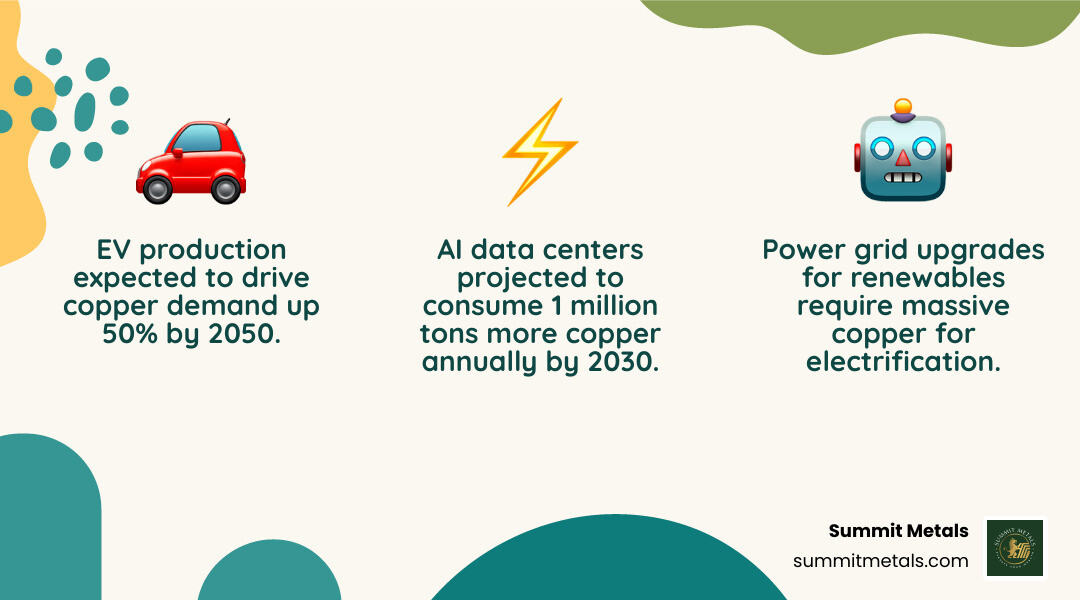
Right now, the structural case for copper is hard to ignore. Global mine production grew just 1.9% in 2025. New mines take 10 to 15 years to come online. Meanwhile, demand from EV production, power grid upgrades, and AI data centers is projected to push copper consumption up by as much as 50% by 2050. Supply is tightening. Demand is accelerating. That gap is what has investors asking whether copper deserves a place in their portfolio.
But excitement around a commodity does not automatically translate into profit — especially for retail investors navigating premiums, storage, and liquidity challenges.
I'm Eric Roach, a former Wall Street investment banker and M&A advisor who has spent over a decade helping everyday investors build resilient, diversified portfolios using physical metals — and I've fielded the question is copper a good investment? more times than I can count. In this guide, I'll walk you through exactly what the data says, what the risks are, and where copper fits (or doesn't) alongside gold and silver.
Similar topics to Is copper a good investment?:
Is copper a good investment for long-term growth?
When we look at the macro-economic landscape, the argument for copper is essentially an argument for the future of human infrastructure. Unlike gold, which sits in vaults as a store of value, copper is "consumed" by progress. We are currently witnessing a massive structural deficit that isn't likely to resolve itself overnight.
According to S&P Global, the world could face a copper shortfall of more than 10 million metric tons by 2040. This is driven by a simple, stubborn fact: demand is structural, but supply is not. We are asking the world's power grids to do more than they were ever designed to do. Whether it is decarbonization efforts or the massive rollout of renewable energy, copper is the literal "nervous system" of the green transition.

The challenge on the supply side is equally daunting. New copper mines typically require 10 to 15 years from initial exploration to commercial output. Existing mines are facing declining ore grades, meaning miners have to dig up more rock to get the same amount of metal. When you combine these constraints with increasing permitting timelines, you get a market where supply cannot simply "turn on the tap" when prices rise. This dynamic is why many analysts view copper as a delayed catch-up opportunity compared with metals that have already seen major price runs.
The AI and EV demand explosion
If you want to understand why Is copper a good investment? is the question of the year, look no further than your local EV charging station or the nearest data center.
- Electric Vehicles (EVs): A conventional internal combustion engine car uses roughly 20-25 kg of copper. An EV requires three to four times that amount. As global EV production scales, the automotive sector is becoming a dominant force in copper consumption.
- AI Data Centers: This is the newest and perhaps most explosive driver. AI data centers require high-capacity power transmission, advanced cooling systems, and dense cabling. Analysts expect data center copper consumption to rise materially over the coming decades as compute infrastructure expands.
- Power Grids: Smart cities and renewable energy sources like wind and solar require significantly more copper for wiring and grounding than traditional fossil fuel plants.
Physical Bullion vs. Financial Assets: Navigating the Market
If you've decided that the "Doctor Copper" thesis makes sense, your next hurdle is deciding how to own it. This is where many retail investors get "bent out of shape."
There is a massive distinction between physical bullion and financial derivatives like ETFs or futures. For example, the United States Copper Index Fund (CPER) is a popular way to gain exposure. Over the past year, CPER was up roughly 28%, outpacing the S&P 500’s 15.5% gain. However, CPER holds futures contracts, not physical copper. This exposes you to "contango"—a situation where the fund has to sell expiring contracts and buy more expensive future ones, which can eat into your returns over time.
On the other hand, many of our clients at Summit Metals prefer the security of tangible assets. We offer 999 fine copper bars for those who want to hold the metal itself. However, you must understand the copper bar cost involves more than just the current spot price.
The "Premium Trap" in physical copper
We need to have a heart-to-heart about premiums. In the precious metals world (gold and silver), premiums are usually a small percentage of the total value. In the copper world, they can be staggering.
Consider this real-world scenario often discussed in investment circles: An investor buys a 1kg copper bullion bar for approximately $39.30. At that same moment, the "melt value" or scrap value of that copper might only be around $9.00. That is a premium of roughly 400% over the spot price!
Why does this happen? It’s the shiny truth about bullion. Copper is heavy and expensive to refine, cast, and ship. The labor and logistics required to make a pretty 1kg bar are often higher than the value of the metal inside.
If you buy at a 400% premium, the market price of copper has to quintuple just for you to break even on the "melt value." This is why experts often caution against copper bullion as a short-term "flip." It is a long-term play on the industrial necessity of the metal, or a collector’s hobby, rather than a high-liquidity trading vehicle.
Copper vs. Gold and Silver: Which Metal Wins?
To decide if Is copper a good investment? for your specific needs, you have to compare it to the "big brothers" of the metal world.
| Feature | Gold | Silver | Copper |
|---|---|---|---|
| Primary Use | Monetary / Store of Value | Industrial / Investment | Industrial / Infrastructure |
| Volatility | Moderate | High | Very High |
| Safe-Haven Status | Excellent | Good | Low (Cyclical) |
| Inflation Hedge | Proven | Strong | Moderate |
| Storage Density | Very High ($2k+ in 1oz) | Moderate ($30+ in 1oz) | Very Low (~$0.30 in 1oz) |
While gold often moves based on fear, interest rates, and central bank buying, copper moves based on GDP growth and factory orders. Silver bridges part of the gap because it has both monetary history and industrial demand.
Copper is a "base metal," meaning its value is tied to its utility. If the global economy enters a deep recession, copper prices usually tank because construction and manufacturing slow down. Gold, conversely, often shines during those same periods.
Why gold coins offer unique protections
While we are discussing portfolio resilience, it is worth noting why many of our investors in Salt Lake City and across Wyoming still prioritize gold coins as their foundation.
When you look at gold bar types, they are excellent for bulk accumulation. However, gold coins offer unique protections that bars do not:
| Feature | Gold Coins | Gold Bars |
|---|---|---|
| Face Value | Yes (Legal Tender) | No |
| Fraud Protection | High (Government Backed) | Standard |
| Liquidity | Very High (Global Recognition) | High |
| Counterfeit Risk | Lower (Stiffer Penalties) | Moderate |
| Best For | Security and Portability | Bulk Accumulation |
- Face Value: Most sovereign gold coins, such as the American Eagle or Buffalo, carry a legal tender face value.
- Fraud Protection: Because they are government-issued currency, counterfeiting them carries much stiffer legal penalties than faking a generic bar.
- Liquidity: Coins are recognized instantly by dealers worldwide, often making them easier to sell in a pinch than a large copper ingot.
For many investors, that means copper can play a growth-oriented supporting role, while gold and silver remain the core holdings for stability, portability, and easier resale.
Strategic Entry and Exit: Autoinvest and Liquidity
At Summit Metals, we believe that the best way to build wealth isn't by "timing the market," but by time in the market. This is why we advocate for a disciplined approach.
Autoinvest with Summit Metals: Dollar-cost averaging for tangible assets Just like you contribute to a 401k every month, our Autoinvest subscriptions allow you to accumulate physical metals automatically. By buying a set dollar amount every month, you buy more when prices are low and less when prices are high. This smooths out the volatility that "Doctor Copper" is famous for.
| Strategy | How It Works | Best For | Main Advantage |
|---|---|---|---|
| One-time purchase | Invest a lump sum at once | Investors with strong conviction on price | Immediate full exposure |
| Autoinvest | Buy every month automatically | Long-term savers | Dollar-cost averaging reduces timing risk |
| Opportunistic buying | Purchase only on pullbacks | Active investors | More control over entry points |
For many readers, Autoinvest is the most practical path. It turns metals accumulation into a repeatable monthly habit, much like investing through a workplace retirement plan, while keeping your purchases aligned with Summit Metals' transparent, real-time pricing.
Seamless Exit Strategy: Sell to us An investment is only as good as your ability to turn it back into cash. This is the biggest hurdle for copper investors-finding someone to buy back those heavy bars without charging you a massive fee.
We recommend considering your exit strategy before you even buy. By using our Sell to us program and utilizing private vault storage, you can keep your assets liquid. When your metal is stored in a professional vault, it never leaves the "chain of integrity," meaning we can buy it back from you instantly without needing to re-authenticate or ship heavy crates across the country. This is how you turn a bar into a bank balance efficiently.
| Exit Method | Convenience | Potential Friction | Best Use Case |
|---|---|---|---|
| Local private sale | Low | Finding buyer, negotiating price | Small occasional sales |
| Dealer sale after self-storage | Moderate | Ryan Test, authentication, delays | Investors storing at home |
| Summit Metals Sell to us with private vault storage | High | Minimal when chain of integrity is maintained | Investors who want smoother liquidity |
Thinking about the sale process before you buy is one of the smartest moves a metals investor can make. Entry strategy matters, but exit strategy determines how efficiently you realize value.
Frequently Asked Questions about Copper
Is copper a good investment compared to the S&P 500?
Physical copper serves a different purpose than the S&P 500. While the stock market represents ownership in companies, copper is a tangible asset with no counterparty risk. In the past year, copper (via CPER) actually outperformed the S&P 500. However, stocks offer dividends, while copper costs money to store. Copper is a diversification tool, not a total replacement for equities.
Is copper a good investment for retail beginners?
For a beginner, the high premiums on physical copper can be discouraging. If you are just starting, we often recommend looking at silver or gold first because the "buy-sell spread" is much narrower. If you are set on copper, ensure you are buying for the long haul (10+ years) to allow the industrial demand thesis to outweigh the initial premium you paid.
Conclusion: Building a Resilient Portfolio
So, Is copper a good investment? It is a spectacular "thematic" investment for the 21st century. If you believe the world will continue to electrify, adopt AI, and drive EVs, copper is the essential ingredient.
At Summit Metals, we are here to help you navigate these markets with transparent, real-time pricing. Whether you are looking for the safe-haven stability of gold or the industrial upside of copper, we provide the authenticated products you need to protect your wealth.
Don't let the complexity of the metals market stop you from diversifying. Check out our guide on how to buy metal online and start building your "copper-lined" portfolio today. Prices shown are at the time of this publication.


