

Introduction: Turning Your Precious Metals into Cash
Selling gold and silver for cash can feel overwhelming—dealers throw around terms like "spot price" and "spread," and you're left wondering if you're getting a fair deal or getting ripped off. Here's what you need to know right now:
Quick Guide: What to Expect When Selling
- Fair Price Range: Most reputable dealers offer 95% of spot price for standard bullion
- Best Buyers: Online dealers typically pay more than local shops; avoid pawn shops entirely
- Payment Timeline: 2-5 business days after verification (faster with overnight shipping)
- Minimum Amounts: Many dealers require $1,000 minimum transaction
- Tax Reporting: Sales over certain thresholds trigger IRS Form 1099-B
Whether you're sitting on a big gain and want to capitalize, need cash for a major life event, inherited precious metals from family, or are simply cleaning out your collection, you deserve top dollar.
The reality is straightforward: dealers operate on thin margins—often just a few percentage points. Understanding how the market works, what your specific items are worth, and where to sell them makes the difference between walking away satisfied and feeling like you left money on the table.
I'm Eric Roach, and I've spent over a decade in investment banking helping Fortune 500 companies steer complex hedging and risk strategies before channeling that Wall Street expertise into precious metals. I've guided countless clients through selling gold and silver for cash, but I've learned that a successful sale begins long before you decide to liquidate. It starts with a smart acquisition strategy, like Summit Metals' Autoinvest program that lets you build your holdings over time, similar to a 401k. By dollar-cost averaging into popular, highly liquid bullion every month, you set yourself up for an easier, more profitable exit.
It also involves planning your exit strategy from day one, which can include secure storage in a private vault to ensure your assets are liquid when you need them. With Summit Metals, you can buy, store, and later sell to us through a single, transparent ecosystem—so when it is time to convert metals into cash, the process is fast and straightforward.
Find more about selling gold and silver for cash:
Step 1: Understand What Your Gold and Silver is Worth
Before you even think about contacting a buyer, the first and most crucial step is to understand the true value of your gold and silver. This knowledge is your best defense against lowball offers and ensures you get a fair price. We’ll dig into key terms like spot price, melt value, premiums, and dealer spreads, and explain how they all factor into the cash you receive.
Spot Price, Melt Value, and Premiums: The Foundation of Value
At the heart of precious metals valuation is the spot price. This is the live market price for immediate delivery of a commodity, such as gold, silver, or platinum. Dealers constantly monitor this price, as it sets the absolute floor for any offer you receive. Think of it as the raw material cost.
Next, we have melt value. This refers to the basic intrinsic bullion value of a coin or other item if it were melted down and sold purely for its metal content. For most bullion items, the melt value is very close to the spot price, adjusted for the item's exact weight and purity.
Finally, there's the premium. When you buy gold and silver, you often pay a premium over the spot price. This covers the costs of minting, fabrication, distribution, and the dealer's profit margin. When you sell, you generally won't recoup the entire premium you paid. Instead, the dealer will factor in their own premium for reselling the item.
Dealer Spreads and Fair Price Expectations
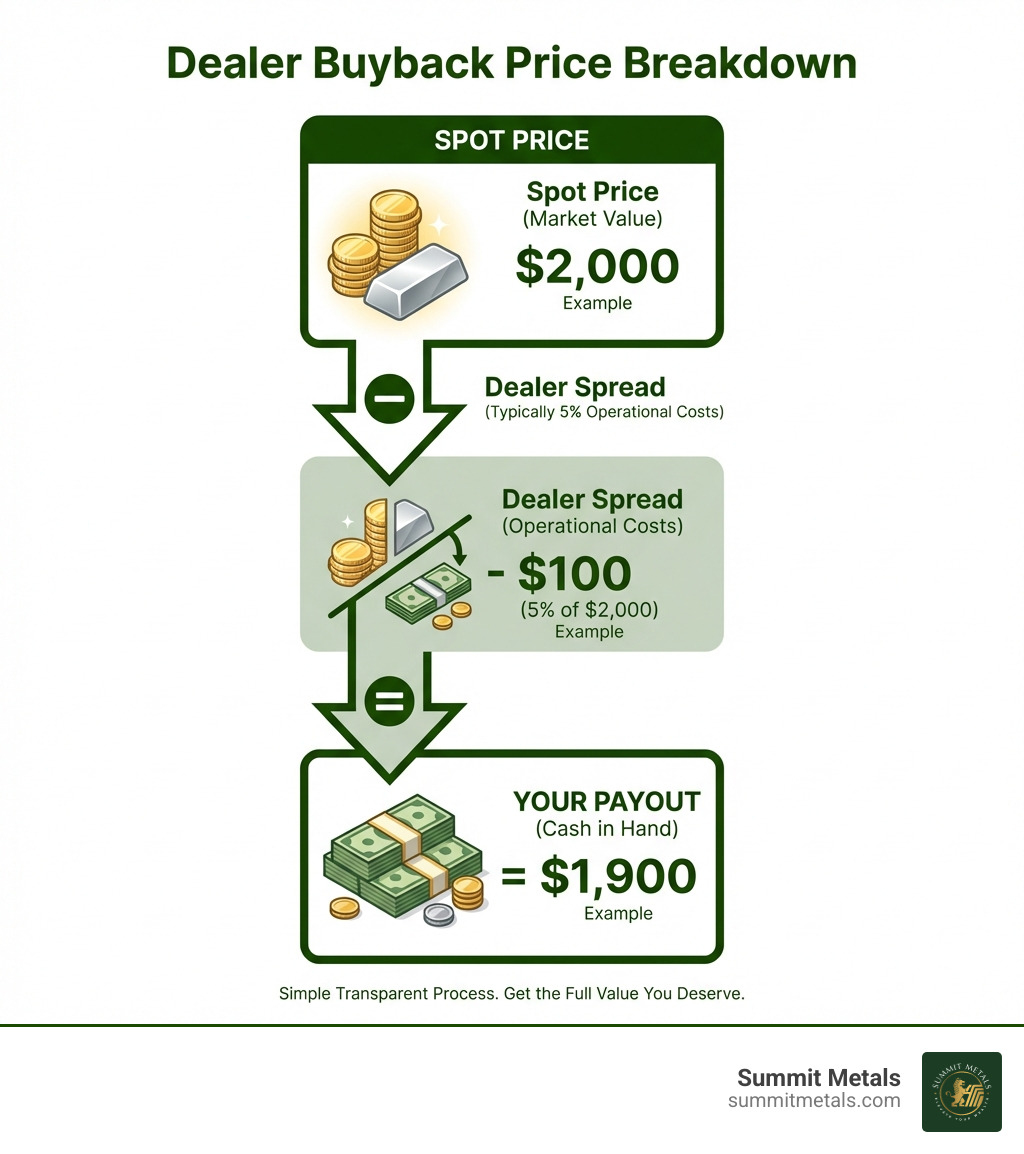
Dealers operate on what's called a "spread"—the difference between what they charge to sell an item and what they will pay to purchase it. This spread isn't some massive profit margin; it covers their operational costs like staff, shipping, insurance, storage, and the risk of holding inventory. The reality is that these spreads are "razor thin, often a few percent at best," as one expert notes.
So, what's a fair price to expect when selling gold and silver for cash? Generally speaking, most reputable bullion dealers will offer about 95 percent of the spot price for gold and silver. For popular items like one-ounce American Eagle or Maple Leaf gold coins, the average retail commission (which influences buyback prices) is about five or six percent. This means if the spot price of gold is $2,000 per ounce, you might expect around $1,900 for a one-ounce gold coin.
That dealers' buy prices are dynamic. They are influenced not just by the spot price but also by their immediate inventory needs and how quickly they can resell a specific item. If a dealer is short on a particular product that sells quickly, they might offer a slightly higher buyback premium.

Bullion vs. Numismatic vs. Scrap: Know What You Have
The type of gold or silver you possess significantly impacts its resale value. It's crucial to correctly identify your items before seeking a quote.
| Feature | Bullion Coins/Bars | Numismatic (Rare) Coins | Scrap Metal |
|---|---|---|---|
| Primary Value | Based on precious metal content (melt value) | Rarity, condition, and collector demand | Precious metal content only |
| Price vs. Spot | Priced close to spot, plus a small premium | Can be significantly higher than melt value | Priced below spot, as it needs refining |
| Best for | Investors seeking direct exposure to metal prices | Collectors and specialized investors | Recycling and recovering metal value |
| Selling Process | Straightforward, sold to bullion dealers | Requires appraisal, sold to collectors or specialized dealers | Sold to refiners or dealers who buy scrap |
- Bullion Coins and Bars: These are valued primarily by their weight in a specific precious metal. Examples include gold and silver American Eagles, Canadian Maple Leafs, and various sizes of gold and silver bars from reputable mints. Their value is directly tied to the spot price. If you’re looking to sell your bullion, we have a guide on where you can sell your gold coins for the best price.
- Numismatic (Rare) Coins: Unlike bullion, the value of a collector or rare coin is based on its rarity, demand, condition, and mintage. These coins often command prices significantly higher than their melt value. Selling these requires specialized knowledge, and it’s best to consult with a professional numismatist or use resources like 'sold' listings on eBay for comparable items. For insights on finding the right buyer for these unique pieces, check out don't get short-changed: finding the right buyer for your precious coins.
- Jewelry: Gold and silver jewelry can be a bit more complex. Investment-grade bullion jewelry, made purely of gold or with minimal alloy, retains value tied to the gold price. However, costume jewelry's value is more subjective, based on design and craftsmanship rather than just metal content. Dealers will often assess jewelry based on its metal purity and weight, but also consider any gemstones.
- Scrap Metal: This category includes broken jewelry, dental gold, or other pieces that are not intact. Scrap metal has the lowest resale price because it must be melted down and refined before it can be fabricated into new products. If you have scrap, our guide turn trash to treasure: how to sell your scrap gold and silver offers valuable tips.
How Form Factor Affects Value: Coins vs. Bars
When considering selling gold and silver for cash, the form factor—whether it's a coin or a bar—can influence its resale value, recognizability, and even its security.
| Feature | Gold Coins (e.g., American Eagles) | Gold Bars (e.g., 1 oz generic bar) |
|---|---|---|
| Resale Value | Often higher demand and liquidity, especially for government-minted. | Strong resale value, but might be slightly less liquid than popular coins. |
| Recognizability | Highly recognized globally, easier to authenticate. | Reputable brands are recognized, generic bars less so. |
| Premium over Spot | Typically carry a higher premium when purchased. Can retain some of this premium upon sale. | Generally lower premiums than coins. May not retain as much premium upon sale. |
| Security against Fraud (Face Value Protection) | Has a legal tender face value, making counterfeiting more difficult and providing a baseline intrinsic value. This government backing offers a layer of protection and trust. | No legal tender face value; value is solely based on metal content and brand reputation. |
From an exit-strategy perspective, coins often shine when it's time to sell. Their face value and government backing provide an extra layer of confidence for buyers, which can translate into stronger bids and faster liquidity—especially when you are using a structured approach like Summit Metals' Autoinvest to accumulate recognizable, in-demand coins over time.
The Impact of Brand and Type on Resale
Not all gold and silver bullion is created equal in the eyes of a buyer. The brand and specific type of product can significantly affect its resale value and how easily you can sell it.
- Government Coins: These are often the "easy movers" for dealers. Sovereign coins like American Gold Eagles, American Silver Eagles, Canadian Maple Leafs, and Gold Buffalos generally fetch the highest resale price. Dealers are confident they can quickly resell these popular, widely recognized products. The ANA notes that American Eagle and Canadian Maple Leaf bullion coins usually have a higher retail price than South African Krugerrands, which can also influence buyback offers.
- Branded Bars: Gold and silver bars from reputable mints and refineries (for example, sovereign and well-known private mints) also have strong resale value. These brands are recognized for their quality and authenticity, making them desirable to dealers.
- Generic Rounds and Bars: While still valued by their metal content, generic rounds or unbranded bars might receive "softer bids" from dealers. They can be harder for dealers to move quickly compared to their branded counterparts, which translates to a slightly lower offer for you.
- Costco Gold Bars: Even popular retailers like Costco sell gold bars. If you've purchased one, understanding its specific market position is key to maximizing your return. We've put together a comprehensive guide on selling your Costco gold bar and silver for maximum value: the ultimate guide with Summitmetals.com.
Dealers pay more for items they know will sell quickly. The more liquid and recognizable your gold or silver product, the better price you're likely to receive when selling gold and silver for cash. This is why a strategic buying approach, like using Summit Metals' Autoinvest program to regularly purchase popular, liquid coins, can pay dividends when it's time to sell through our streamlined sell to us process.
Step 2: Where to Go for Selling Gold and Silver for Cash
Once you understand what you have and its approximate value, the next step is deciding where to sell. Your choice of buyer can significantly impact the amount of cash you walk away with, as well as the convenience and safety of the transaction.
Comparing Your Options: Online Dealers vs. Local Shops vs. Pawn Shops
Let's break down the most common avenues for selling gold and silver for cash:
| Feature | Online Dealers (e.g., Summit Metals and other reputable bullion dealers) | Local Coin Shops/Precious Metal Buyers | Pawn Shops |
|---|---|---|---|
| Payout Price | Typically highest payouts, often close to 95% of spot for standard bullion. Transparent pricing published online. | Competitive but often a few percentage points below top online offers, especially for small lots or less common items. | Usually the lowest offers, often well below melt value. |
| Convenience | Sell from home; online quotes; shipping labels and instructions provided. | In-person visit required; you handle transport and security. | Convenient locations but little transparency on pricing. |
| Speed of Payment | 2–5 business days after metals are received and verified. | Immediate—walk out with cash or check the same day. | Immediate but at a steep discount. |
| Safety | Insured shipping and established processes when working with reputable dealers; no need to carry large amounts of metal in public. | Requires carrying metals to and from the store; safety depends on neighborhood and how discreet you are. | Similar risks to local shops, plus higher chance of predatory practices. |
| Best For | Sellers prioritizing the highest price and a structured process, especially for standard bullion and larger lots. | Sellers who want face-to-face interaction and instant payment and are willing to accept potentially lower offers. | Emergency, last-resort situations where getting cash fast matters more than price. |
Selling Online: Pros and Cons
Online dealers—especially those focused on investment-grade metals like Summit Metals—are often the best option when your goal is to maximize your payout.
Pros of Selling Online
- Higher average payouts compared to most local options
- Transparent, real-time buyback prices
- Wider market and strong demand for common bullion products
- Insured shipping and documented chain of custody
- Ability to integrate with a broader strategy (for example, using Autoinvest to build your stack, storing it in a private vault, and later using a streamlined sell to us process)
Cons of Selling Online
- Payment is not instant; you must wait for shipping and verification (typically 2–5 business days)
- Requires secure packing and shipping of your metals
- Some dealers have minimum transaction amounts (often around $1,000)
To compare potential offers and decide whether selling online makes sense for your situation, see online vs. local: where to sell silver.
Selling Locally: The In-Person Advantage
Local coin shops and precious metal buyers can be a solid option if you value speed and direct interaction.
Advantages of Selling Locally
- Immediate payment in cash or check
- No need to ship or insure your metals
- Ability to ask questions and negotiate face-to-face
Potential Drawbacks
- Offers may be lower than top online dealers, especially on small or unusual items
- Limited competition in your area can mean less favorable pricing
- Carrying significant value on your person can pose safety risks
If you decide to sell locally, make sure to get multiple quotes and check reviews. For more tips, read local silver buyers: get cash for your precious metals.
Places to Avoid When Selling Your Bullion
Not all buyers are created equal. Some options almost guarantee that you'll leave money on the table.
- Pawn Shops: Designed for quick, distressed sales, not fair market pricing. Offers are typically far below melt value.
- "We Buy Gold" Pop-Up Signs: Many of these temporary or kiosk-style operations focus on aggressive marketing and low payouts rather than transparency.
- Auction Sites for Standard Bullion: While platforms like eBay can work for unique or numismatic pieces, they introduce fees, fraud risk, and shipping hassles that rarely make sense for common bullion.
This isn't Pawn Stars—you don't need drama, you need a clear number and a reliable process. Planning your exit strategy in advance through Summit Metals—buying via Autoinvest, using private vault storage, and later choosing our sell to us option—helps you avoid these low-value channels entirely and keeps more of your metal's value in your pocket.


