

What Is the Price of 1 Ounce of 14K Gold Right Now?
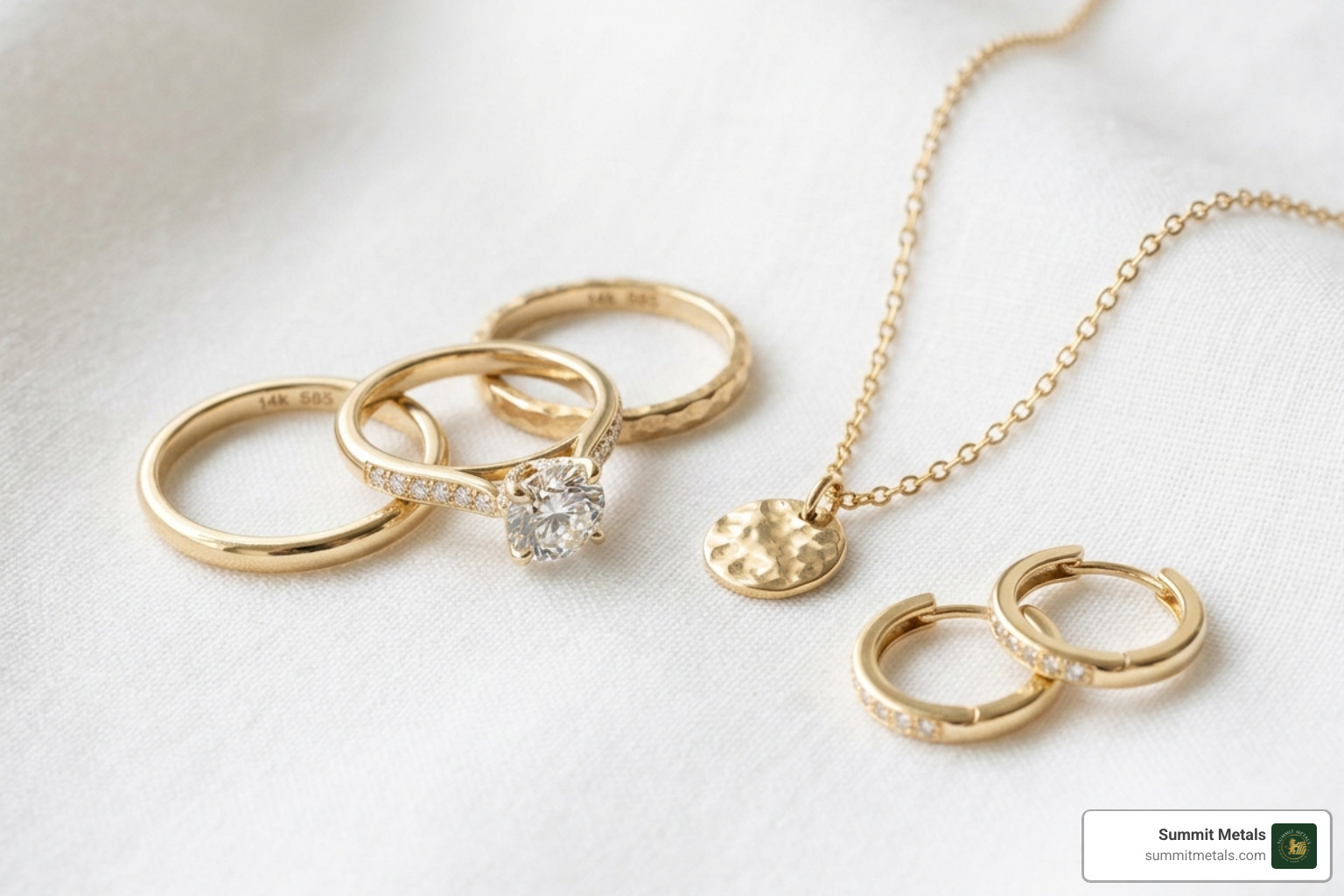
The price of 1 ounce of 14k gold sits at approximately $2,628 USD at the time of this publication. Here's a quick snapshot to answer the most common questions right away:
| Metric | Value (at publication) |
|---|---|
| 14K Gold Price per Troy Oz | ~$2,628 USD |
| 14K Gold Price per Gram | ~$84 USD |
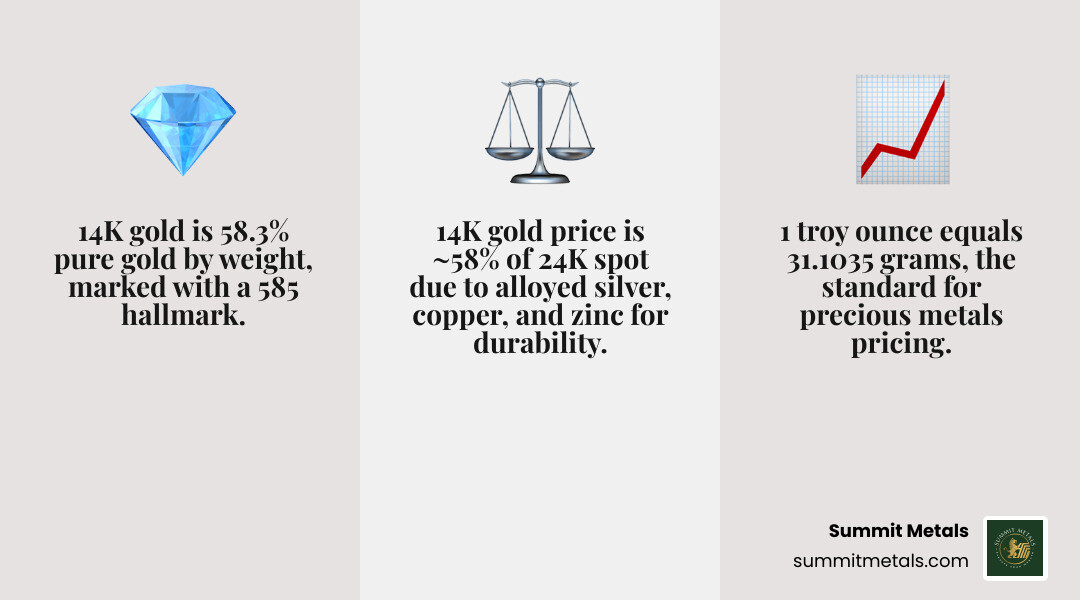
| 14K Purity | 58.33% pure gold (585 hallmark) |
| Sellback / Buyback Price | ~$2,375 USD per troy oz |
| 24K Spot Price (for reference) | ~$4,506 USD per troy oz |
| 1-Year Price Change | +46% |
Prices shown are at the time of this publication and change in real time.
So why does 14K gold trade at roughly 58% of the 24K spot price? Because it is 58% gold. The rest is a blend of silver, copper, or zinc. That alloy blend makes it more durable — and far more common in everyday jewelry and investment pieces in the United States.
But the price you see quoted online is rarely the price you'll actually pay or receive. Dealer premiums, bid-ask spreads, and local taxes all shift the final number. Whether you're buying for the first time or looking to sell a piece you already own, understanding how that number is built will help you make a smarter decision.
I'm Eric Roach, a former Wall Street investment banker and M&A advisor who spent over a decade helping Fortune 500 companies hedge risk — and I now apply that same institutional discipline to help everyday investors understand the price of 1 ounce of 14k gold and build resilient precious metals strategies. This guide breaks down everything you need to know, clearly and without the jargon.
Understanding the Price of 1 Ounce of 14k Gold
When we talk about the price of 1 ounce of 14k gold, we are looking at a specific "melt value." Because 14k gold is an alloy, its market value is directly tied to the amount of pure gold hidden inside that mixture. At Summit Metals, we track these movements in real-time to ensure our community in Salt Lake City and across the country has access to the most accurate data for 2026 and beyond.

The market value of 14k gold is essentially 58.33% of the current "spot price" of pure gold. If the spot price of pure gold (24k) moves up by $10, the price of your 14k ounce will move up by about $5.83. It's a mathematical shadow of the pure bullion market.
Understanding this baseline is the first step in realizing exactly 14 Karat Gold Worth Per Ounce when you are looking to buy or sell.
Comparing 14K to 24K Pure Gold
The primary difference between these two is purity and purpose. 24k gold is 99.9% pure, making it very soft and prone to scratching. It is the standard for investment-grade bullion bars. 14k gold, however, is the "workhorse" of the American jewelry market. By mixing gold with metals like copper, silver, or zinc, the resulting alloy is much tougher and more affordable.
| Karat | Purity Percentage | Typical Use | Relative Price per Ounce |
|---|---|---|---|
| 24K | 99.9% | Investment Bullion | 100% of Spot |
| 18K | 75.0% | Luxury Jewelry | 75% of Spot |
| 14K | 58.3% | Wedding Bands/Fine Jewelry | 58.3% of Spot |
| 10K | 41.7% | Durable Everyday Jewelry | 41.7% of Spot |
Factors Influencing the Price of 1 Ounce of 14k Gold
Gold doesn't live in a vacuum. Several global "gears" turn the dial on the price of 1 ounce of 14k gold:
- Geopolitics: During times of conflict or global uncertainty, investors rush to gold as a "safe haven," driving prices up.
- Inflation: When the purchasing power of the dollar drops, gold typically retains its value, making it a classic hedge.
- Interest Rates: Generally, when interest rates rise, gold prices may face pressure because gold doesn't pay a dividend or interest.
- USD Strength: Since gold is priced in U.S. Dollars globally, a stronger dollar can sometimes make gold more expensive for international buyers, dampening demand.
- Central Banks: When major countries increase their gold reserves, it creates a massive "buy" signal for the rest of the market.
How 14K Purity and the Troy Ounce System Affect Value
In precious metals, we don't use the same ounces you find in a grocery store. We use the Troy Ounce. One troy ounce equals exactly 31.1035 grams. This is heavier than a standard "avoirdupois" ounce (which is about 28.35 grams).
When you see a hallmark like "585" on a ring or coin, it means the piece is 58.5% pure gold. While the theoretical purity of 14k is 58.33% (14 divided by 24), many manufacturers use the 585 standard to ensure they stay above legal requirements. You can learn more about these markings in our guide on Understanding Karats and Purity in Gold.
For real-time tracking of these specific purity values, professional market resources are invaluable for active traders who need to stay on top of daily fluctuations.
Calculating the Price of 1 Ounce of 14k Gold
Want to do the math yourself? It's simpler than it looks. To find the "melt value" of 14k gold, use this formula:
Price of 14k Ounce = (24K Spot Price) x 0.5833
If you prefer working with smaller weights, you can find the 14K Gold Price Per Gram by dividing that ounce price by 31.1035. At Summit Metals, we provide these calculations transparently so you never have to guess what your assets are worth.
The Difference Between Troy Ounces and Avoirdupois Ounces
It is a common mistake to weigh gold on a standard kitchen scale and assume the reading is accurate for market pricing. Because the troy ounce is nearly 10% heavier than a standard ounce, using the wrong unit can lead to significant errors in valuation. Always ensure your scale is set to "ozt" (troy ounces) or "g" (grams) to get a professional-grade measurement.
Market Dynamics: Spot, Bid, and Ask Prices Explained
When you look at a live ticker for the price of 1 ounce of 14k gold, you'll often see two numbers: the Bid and the Ask.
- Bid Price: This is what a dealer is willing to pay you for your gold.
- Ask Price: This is the price at which the dealer is willing to sell gold to you.
- The Spread: The difference between these two numbers is the dealer's margin. This covers the costs of authentication, storage, and business operations.
For those interested in specialized measurements like pennyweights, or broader market trends, you can track the Gold Spot Price through global financial news to see where the market is heading. For a deeper dive into historical patterns, check out our 14Ct Gold Price Per Gram Complete Guide.
Historical Trends in the Price of 1 Ounce of 14k Gold
Gold has been on a remarkable run recently. Over the past year, we have seen a performance increase of over 46%. We've witnessed record highs driven by central bank buying and economic shifts. Historically, 14k gold has proven to be a resilient store of wealth, especially for those who held through short-term volatility.
Why Local Prices Vary from Global Spot Rates
You might notice that a dealer in Salt Lake City has a slightly different price than a ticker from New York or London. This is due to:
- Dealer Premiums: The cost of doing business and physical logistics.
- Making Charges: If the gold is in the form of jewelry, you are paying for the craftsmanship (labor), not just the metal.
- Regional Taxes: Depending on your state or local jurisdiction, sales tax may apply to certain precious metal transactions.
Strategic Investing: Autoinvesting and Exit Strategies
At Summit Metals, we believe gold shouldn't just be something you buy once and forget. We promote a strategy called Autoinvest. Much like a 401k, our Autoinvest program allows you to dollar-cost average by shopping with us every month. This removes the stress of trying to "time the market" perfectly. By buying consistently, you balance out the highs and lows of the price of 1 ounce of 14k gold.
Choosing Your Asset: Gold Coins vs. Gold Bars
When investing, the form of your gold matters. While 14k is common for jewelry, most serious investors look toward 22k or 24k coins and bars.
| Feature | Gold Coins | Gold Bars |
|---|---|---|
| Face Value | Yes (Legal Tender) | No |
| Fraud Protection | High (Harder to counterfeit) | Moderate |
| Premiums | Slightly Higher | Lower (Bulk value) |
| Liquidity | Extremely High | High |
| USP | Protected by government mints | Best for large-scale storage |
We often recommend gold coins for new investors. Because they have a face value and are produced by sovereign mints, they offer an extra layer of protection against fraud.
Planning Your Exit: Liquidity and Private Vaulting
Buying gold is only half the battle; you need an exit strategy. We encourage our clients to consider private vaulting. By storing your metals in a secure, non-bank vault, you maintain total control while ensuring the metal is kept in pristine, "authenticated" condition.
When you are ready to sell, we offer a "Sell to Us" service. Our goal is to provide instant liquidity. While some scrap dealers might only pay 60%, professional buyback prices for investment-grade items typically range from 70-90% of the melt value, depending on the item's condition and market demand. You can see how this applies to specific items like jewelry in our post on 14 Karat Gold Necklace Price.
Explore more about our Sell to Us services to see how we make the liquidation process seamless.
Frequently Asked Questions about 14K Gold
What is the current buyback price for 1 ounce of 14k gold?
The buyback price is usually slightly below the "spot" melt value to account for the dealer's spread and refining costs. At the time of publication, a realistic buyback price for a troy ounce of 14k gold is approximately $2,375 USD, though this varies based on the current market.
Does the color of 14k gold (white, yellow, rose) affect the price?
No. Whether your 14k gold is yellow, white, or rose, the gold content remains the same (58.33%). The color change comes from the other 41.67% of metals used in the alloy (like nickel for white gold or copper for rose gold). The market value is based solely on the gold weight.
How do I verify the 585 hallmark on my gold?
Look for a stamp on the inside of a ring band or near the clasp of a necklace. "14K," "14Kt," or "585" are the most common. You can also use a jeweler's loupe to see it clearly. For high-value items, we recommend professional testing like an XRF scan or an acid test to confirm purity.
Conclusion
Understanding the price of 1 ounce of 14k gold is the key to becoming a confident investor or a savvy seller. By focusing on authenticated gold, transparent pricing, and competitive rates, Summit Metals helps you navigate the complexities of the precious metals market with ease.
Whether you are starting a monthly gold subscription or looking to diversify your portfolio with a bulk purchase, we are here to provide the value and trust you deserve. Gold has stood the test of time for thousands of years—isn't it time you made it part of your financial future?


