

Is Silver Worth Buying Right Now? Here's What the Price Tells You
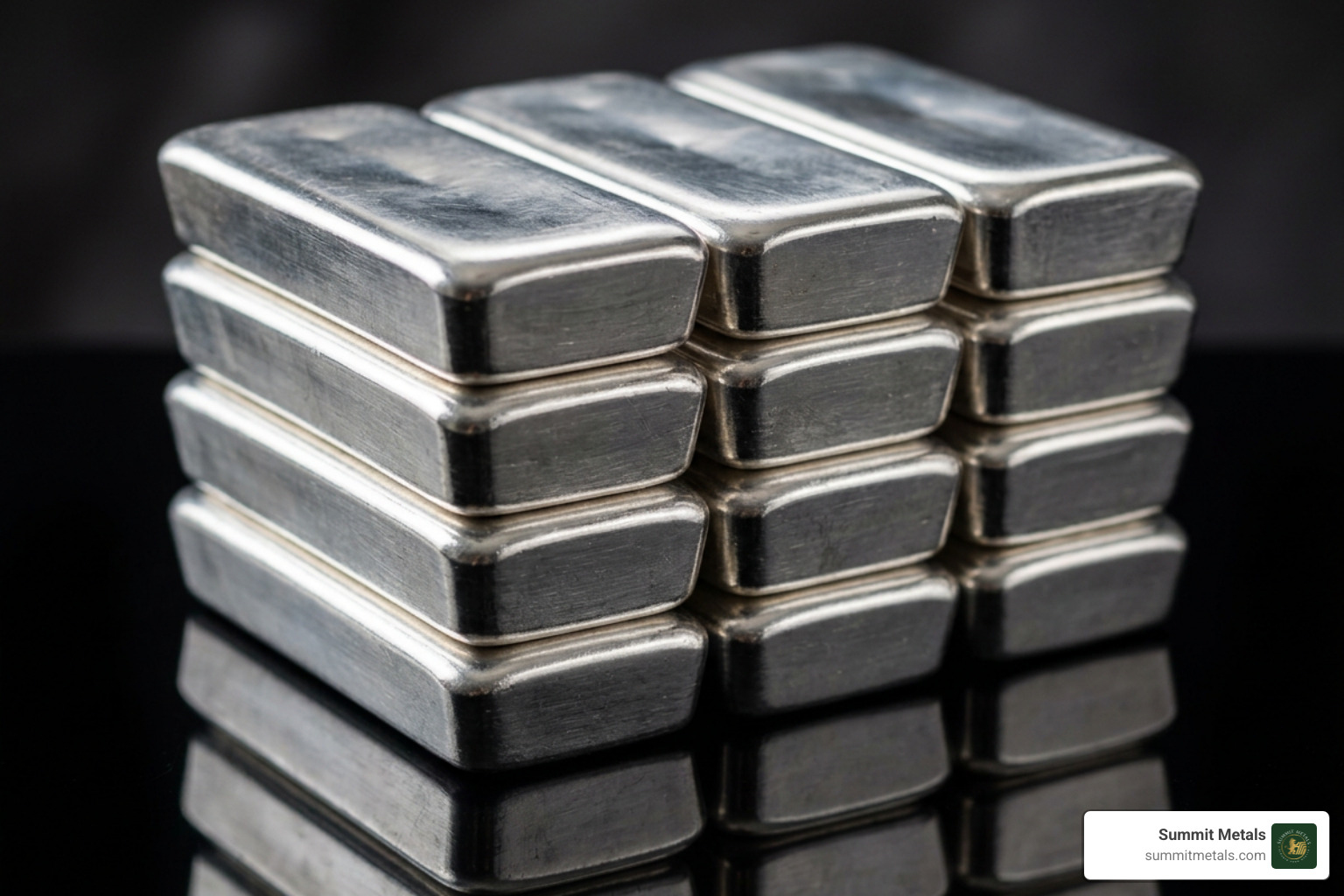
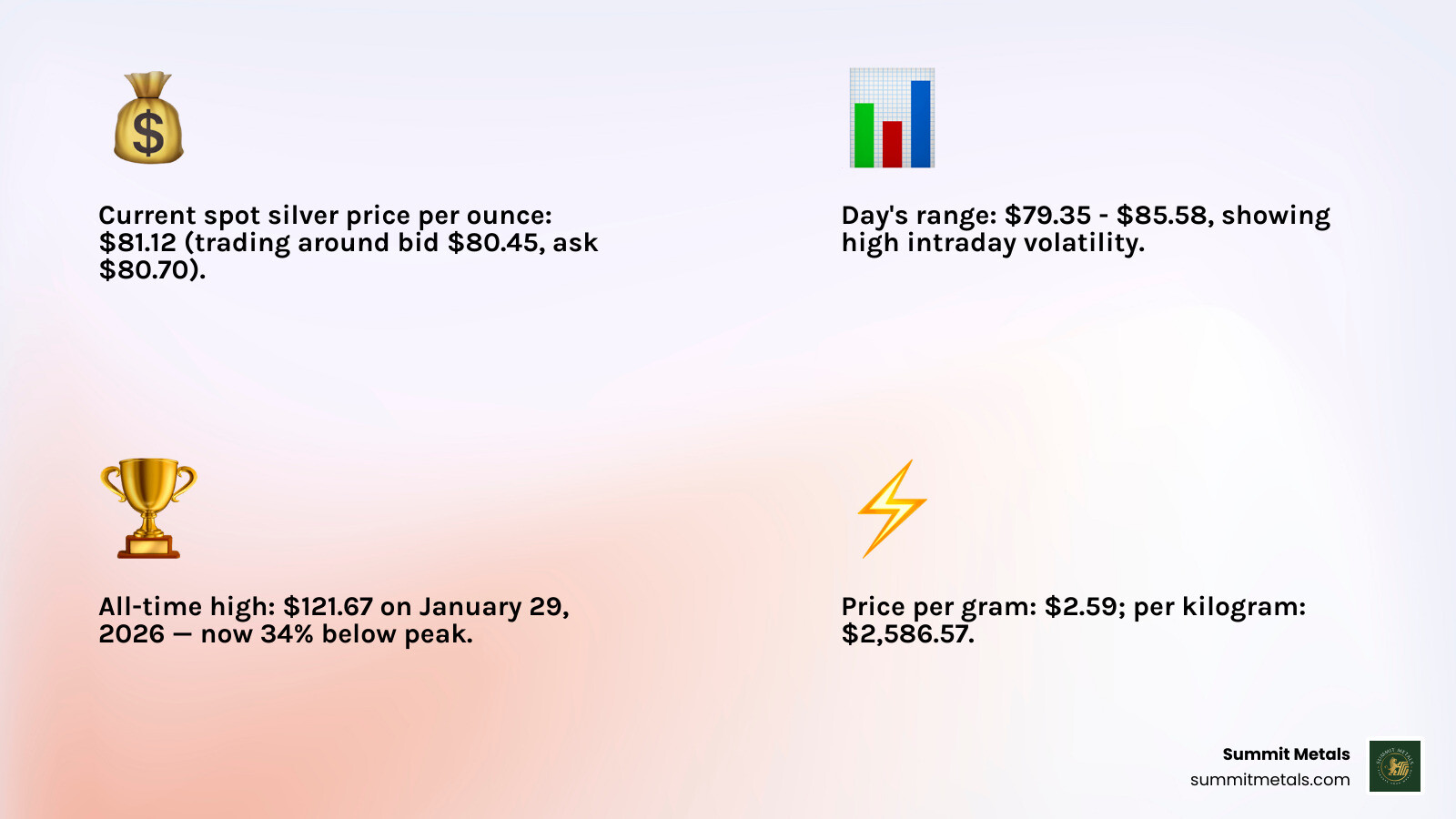
The current spot silver price per ounce is trading around $81.12 (as of publication), after reaching an all-time high of $121.67 on January 29, 2026.
Here's a quick snapshot of where silver stands right now:
| Metric | Value |
|---|---|
| Spot Price (Bid) | $80.45 per ounce |
| Spot Price (Ask) | $80.70 per ounce |
| Day's Range | $79.35 - $85.58 |
| Price per Gram | $2.59 |
| Price per Kilogram | $2,586.57 |
| All-Time High | $121.67 (Jan 29, 2026) |
Prices shown are at the time of this publication.
Silver has pulled back sharply from its 2026 peak — nearly 34% below that all-time high. For investors watching the market, that kind of volatility raises a simple question: is this a buying opportunity, or a warning sign?
The answer depends on why silver moves — and most people don't fully understand that yet.
Silver isn't just a precious metal. It's also a critical industrial material used in solar panels, electric vehicles, and electronics. That dual role makes its price behave differently from gold. Supply has been in deficit for years while industrial demand keeps climbing. At the same time, macroeconomic forces — inflation fears, a shifting U.S. dollar, and geopolitical tension — are pushing more investors toward hard assets.
Whether you're evaluating silver for the first time or adding to an existing position, understanding the mechanics behind the price is the first step to making a confident decision.
I'm Eric Roach, a former Wall Street investment banker and M&A advisor who has guided clients through multi-billion-dollar transactions — and today I apply that same institutional discipline to help everyday investors track the current spot silver price per ounce and build resilient precious metals portfolios. In this guide, we'll break down exactly what's driving silver's price, what you should expect to pay, and how to think about silver as a long-term wealth strategy.
Understanding the Current Spot Silver Price Per Ounce
When we talk about the "spot price," we are referring to the theoretical price at which silver can be exchanged and delivered right now. It is the heartbeat of the precious metals market, updating every few seconds during trading hours. If you’ve ever watched a live financial ticker, you know the current spot silver price per ounce can feel like a roller coaster.
To navigate this, you need to know three numbers:
- The Bid Price: This is the highest price a buyer is willing to pay. Currently, our research shows a bid of $80.45.
- The Ask Price: This is the lowest price a seller is willing to accept. Right now, that sits at $80.70.
- The Day's Range: This shows the volatility. Today, we've seen silver swing between $79.35 and $85.58.
Monitoring these fluctuations is vital for timing your entry into the market. You can track these movements in real-time using a Live Silver Price chart. For a deeper dive into how to read these charts without getting a headache, check out our guide on the silver lining: how to track and understand silver prices.
How the Current Spot Silver Price Per Ounce is Determined
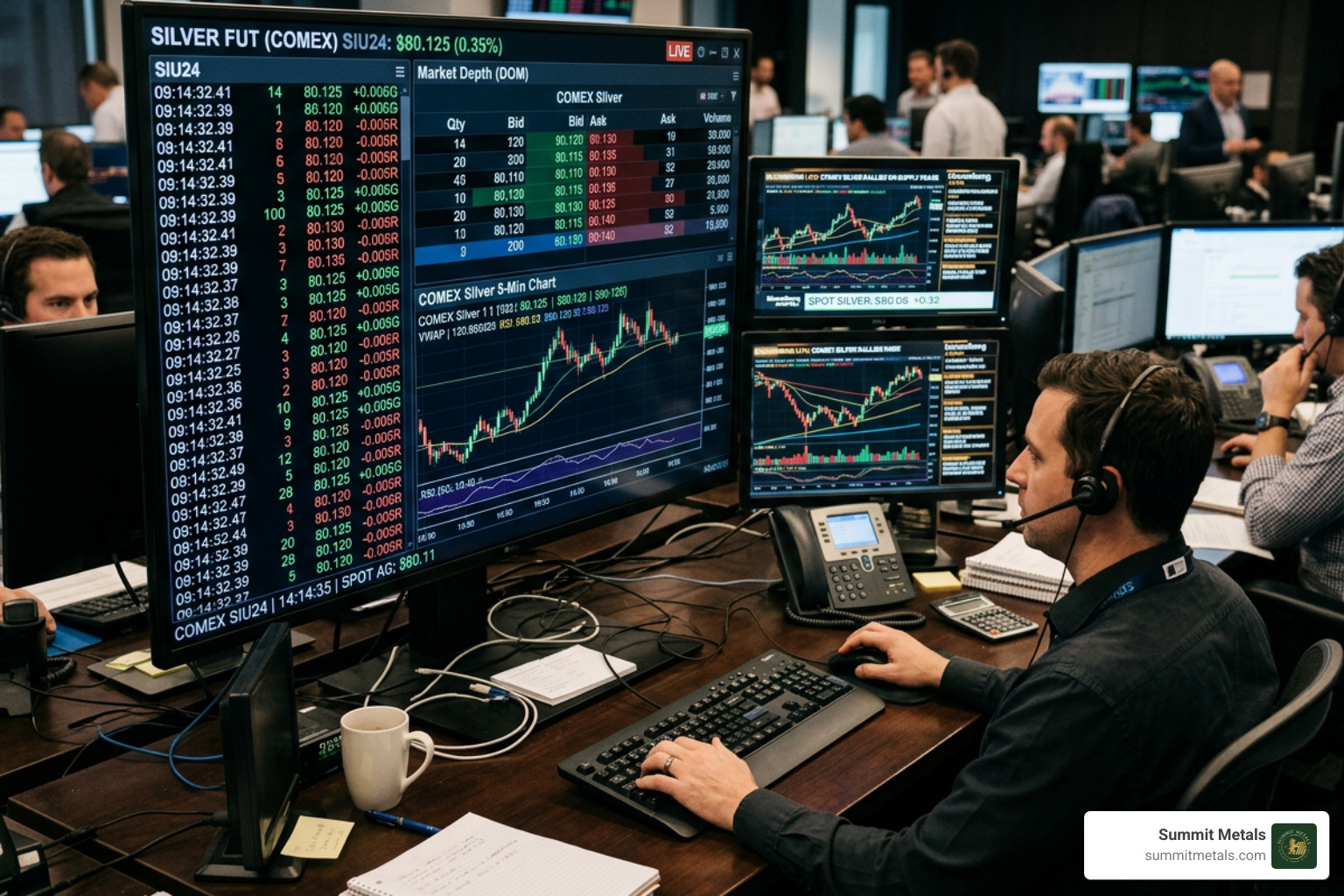
The price isn't just picked out of thin air by a guy in a suit. It is primarily determined through a continuous auction of futures contracts on the COMEX (Commodity Exchange), which is part of the CME Group.
While the COMEX handles the bulk of the "paper" trading in the U.S., the LBMA (London Bullion Market Association) provides the global benchmark for physical silver. These exchanges act as a massive meeting ground where the intersection of the highest bid and the lowest ask creates the "spot" value. This process, known as price discovery, ensures that the price reflects the global consensus on silver's value at any given second.
Why You Can't Buy at the Current Spot Silver Price Per Ounce
We often get asked, "If the spot price is $81.12, why is this silver coin $89?" It’s a fair question! The truth is, nobody buys physical silver at exactly the spot price.
Think of the spot price as the price of "raw" silver sitting in a massive vault in London or New York. To get that silver into your hands in the form of a beautiful coin or bar, several things must happen:
- Refining: The silver must be purified to .999 fineness.
- Manufacturing: It has to be minted into specific weights.
- Logistics: It must be insured and shipped.
- Dealer Margin: Businesses like ours need to cover overhead to keep the lights on in Salt Lake City.
These additional costs are known as premiums. Depending on the product, you might expect to pay anywhere from 2% to 15% (or more) over the spot price. To learn more about navigating these costs, read our article on spot price vs premium: how precious metals pricing works.
Key Drivers Behind Today’s Silver Market
Silver is often called the "Restless Metal" because it answers to two masters: the investor and the industrialist. Unlike gold, which is mostly held as a store of value, silver is a workhorse of modern technology.
Industrial Demand: The Green Revolution Silver has the highest electrical and thermal conductivity of any metal. This makes it indispensable for:
- Solar Photovoltaics: In 2023 alone, solar demand for silver skyrocketed by 63.8% to 193.5 million ounces.
- Electric Vehicles (EVs): An average EV uses about 1 ounce of silver—double what a traditional internal combustion engine car requires.
- Electronics: From your smartphone to 5G towers, silver is the "magic" that makes the tech work.
The Supply Deficit The silver market has been in a structural supply deficit for the past six years. We simply aren't mining enough to keep up with the "Green Revolution." About 70% of silver production is actually a byproduct of mining for other metals like copper, lead, and zinc. This means miners can't just "turn on the tap" for silver if the price goes up; they have to mine more of the base metals first. You can keep an eye on these supply-demand dynamics at Silver Price Today | KITCO.
Macroeconomic Factors and the Gold-to-Silver Ratio
While solar panels drive the floor of the price, macroeconomics drive the ceiling. Factors like U.S. Dollar strength and interest rates play a huge role. When the dollar is weak, silver (which is priced in dollars) often looks more attractive.
Then there is the Gold-to-Silver Ratio. This is simply the price of gold divided by the price of silver. Historically, this ratio has fluctuated between 40:1 and 60:1. In recent years, it has stretched much higher, sometimes over 80:1 or even 100:1.
- High Ratio: Suggests silver is undervalued compared to gold (a "buy" signal for many).
- Low Ratio: Suggests silver is becoming expensive relative to gold.
Currently, with the ratio hovering around 50:1, many investors see a bullish case for silver, anticipating that silver will eventually outpace gold's gains to return to historical norms.
Historical Context: From the Hunt Brothers to the 2026 All-Time High
To understand where we are, we have to look at where we’ve been. Silver’s history is peppered with massive spikes:
- 1980: The Hunt Brothers tried to "corner the market," driving prices to a nominal peak of $49.45. Adjusted for inflation, that is nearly $200 per ounce today!
- 2011: Amidst the fallout of the global financial crisis and the rise of silver ETFs, prices hit $48.70.
- 2026: On January 29, 2026, silver hit a new nominal all-time high of $121.67.
While $121.67 sounds high, when adjusted for inflation, the 1980 peak was actually much "higher" in terms of purchasing power. This tells us that despite the recent record, silver may still have plenty of room to run if it ever tries to match its true 1980 inflation-adjusted value.
Comparing Silver Units: Grams vs. Kilograms
In the precious metals world, we don't use the same ounces you use to weigh flour for a cake. We use the Troy Ounce, which is exactly 31.1035 grams. This is about 10% heavier than a standard "grocery store" (avoirdupois) ounce.
For serious investors, buying by the ounce can get tedious. That’s why many look at bulk options:
- The Kilogram: Contains 32.15 troy ounces. Buying a "kilo bar" often results in lower premiums because the mint only has to make one bar instead of 32 individual coins.
- The Gram: Mostly used for small jewelry or "fractional" silver, but generally carries the highest premiums.
If you’re trying to do the math on your own portfolio, our live silver spot price guide can help you convert between metric and imperial units without breaking a sweat.
Strategic Investing: Physical Assets and Exit Strategies
When you decide to buy silver, you have a choice: Coins or Bars? Both have their place in a balanced portfolio, but they serve different purposes.
| Feature | Silver Coins (Sovereign) | Silver Bars |
|---|---|---|
| Face Value | Yes (e.g., $1 USD) | No |
| Premiums | Higher | Lower |
| Fraud Protection | High (Government backed) | Moderate |
| Liquidity | Extremely High | High |
| Best For | Small transactions & security | Bulk wealth accumulation |
The Case for Coins Sovereign coins (like the American Silver Eagle) carry a legal tender face value. While you’d never spend a $80 silver coin to buy a $1 soda, that face value provides an extra layer of legal protection against counterfeiting. Governments take "coining" very seriously, making these some of the most trusted assets on earth.
The Case for Bars If your goal is to get as many ounces as possible for your dollar, bars are the way to go. Because they are simpler to produce, the current spot silver price per ounce will be much closer to your final purchase price.
Private Vault Storage and Liquidity Owning physical silver is great until you realize a $50,000 investment weighs about 40 pounds. We recommend considering professional storage. Keeping your silver in a private, secure vault not only protects it from theft but also makes it highly liquid. When you're ready to sell, you don't have to ship it back to us—we can simply verify the vault records and send your funds. Learn how to secure your investments with top storage tips.
Building Wealth with Autoinvest and Dollar Cost Averaging
Most people don't have $10,000 sitting around to buy silver all at once. Even if you do, "timing the market" is notoriously difficult. That’s why we created Summit Metals Autoinvest.
This is a "set it and forget it" strategy, much like your 401k. By setting up a monthly subscription, you buy more silver when the price is low and less when the price is high. Over time, this Dollar Cost Averaging lowers your average cost per ounce and removes the emotional stress of watching the daily tickers.
- Autopay: Set your budget and let us handle the rest.
- Consistent Growth: Build a massive silver stack one ounce at a time.
- Flexibility: Start, stop, or change your subscription whenever you like.
Ready to start your silver journey? Discover the power of Autopay or explore Summit Metals Silver Subscriptions today.
Frequently Asked Questions about Silver Prices
What is the difference between the bid and ask price?
The bid is what a dealer is willing to pay you for your silver. The ask is what the dealer is charging to sell it. The difference between the two is called the "spread." A narrow spread usually indicates a very healthy, liquid market.
Why is the troy ounce used for silver instead of a standard ounce?
The troy ounce has been the standard for precious metals since the Middle Ages. It ensures consistency across international borders. Since it is heavier than a standard ounce (31.1g vs 28.3g), always make sure you are using the correct unit when calculating the value of your holdings!
What are the benefits of holding physical silver?
Physical silver has no counterparty risk. Unlike a stock or a digital currency, it doesn't rely on a CEO, a bank, or a power grid to have value. It is a "hard asset" that has been recognized as money for over 5,000 years. In times of hyperinflation—as seen in places like Venezuela or Turkey—physical silver becomes a vital tool for bartering and preserving wealth.
Conclusion
The current spot silver price per ounce tells a story of a metal caught between its glorious past and its high-tech future. With an all-time high of $121.67 in the rearview mirror and a massive industrial supply deficit ahead of us, silver remains one of the most compelling diversification tools for any portfolio.
At Summit Metals, we believe in transparency. Whether you are visiting us in Salt Lake City or shopping from our Wyoming headquarters, we provide real-time pricing and authenticated bullion to ensure you get the best value for your investment.
Plan Your Exit Strategy: Sell Your Precious Metals to Summit Metals for Liquidity and Security An investment is only as good as your ability to turn it back into cash. We don't just want to sell you silver; we want to be your long-term liquidity partner. Whether you have one ounce or one thousand, we offer competitive buy-back rates to ensure your exit is as smooth as your entry. Learn more about selling to us and see how we make the liquidation process fast, secure, and fair.
Is your portfolio shining or dull? With silver's unique industrial demand and historical resilience, adding a little "lunar metal" might be exactly what you need to brighten your financial future.


