

Why Understanding the Cost of Copper Per Ounce Matters
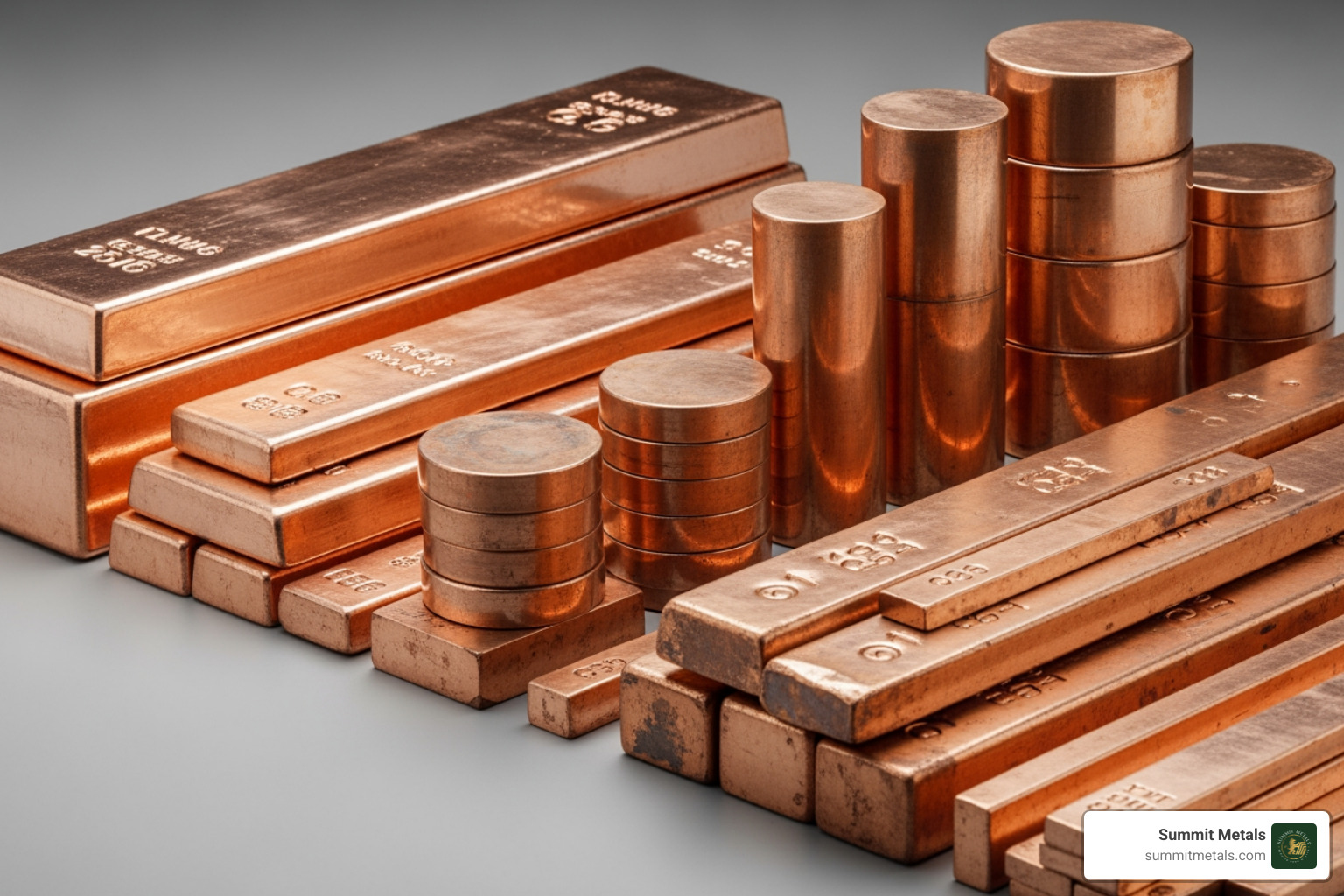
The cost of copper per ounce fluctuates constantly, driven by global supply, demand, and economic conditions. While copper is typically quoted per pound in the market, understanding its per-ounce cost helps investors and buyers make informed decisions. Here's what you need to know right now:
- Live copper bid price: $5.8789 per pound (approximately $0.37 per troy ounce)
- Live copper ask price: $5.8803 per pound (approximately $0.37 per troy ounce)
- Price per gram: $0.0130 USD
- Price per kilo: $12.9608 USD
Prices shown are at the time of this publication.
Copper stands apart from gold and silver—it's an industrial workhorse that powers electrical grids, plumbing systems, and the growing green-energy revolution. Yet it also serves as a tangible asset that investors use to diversify portfolios and hedge against inflation. Understanding how copper is priced, why those prices move, and how to convert between pounds, ounces, grams, and kilos empowers you to evaluate opportunities with confidence.
The copper spot price reflects the value of the soonest-expiring futures contracts on global exchanges like the London Metal Exchange (LME) and COMEX. This price moves 24/7 as traders respond to economic data, mining disruptions, currency shifts, and shifts in industrial demand—especially from sectors like electric vehicles and renewable infrastructure. Unlike precious metals that rely heavily on investment sentiment, copper's price is anchored by real-world consumption, making it a reliable indicator of economic health.
But spot prices are just the starting point. Dealers add premiums, purity affects melt value, and different exchanges quote different units. Whether you're considering physical copper bars, rounds, or even pre-1982 pennies for their 95% copper content, you need a clear framework to decode what you're actually paying per ounce—and what that ounce is truly worth.
I'm Eric Roach, and during more than a decade guiding Fortune 500 clients through complex hedging programs and multi-billion-dollar transactions on Wall Street, I learned how institutions use commodity pricing to manage risk and preserve capital. Today I help everyday investors apply those same principles to tangible assets, including understanding the cost of copper per ounce and how it fits into a diversified wealth-protection strategy. Whether you're exploring copper as an inflation hedge or seeking liquidity through hard assets, transparent pricing is your foundation for smart decision-making.
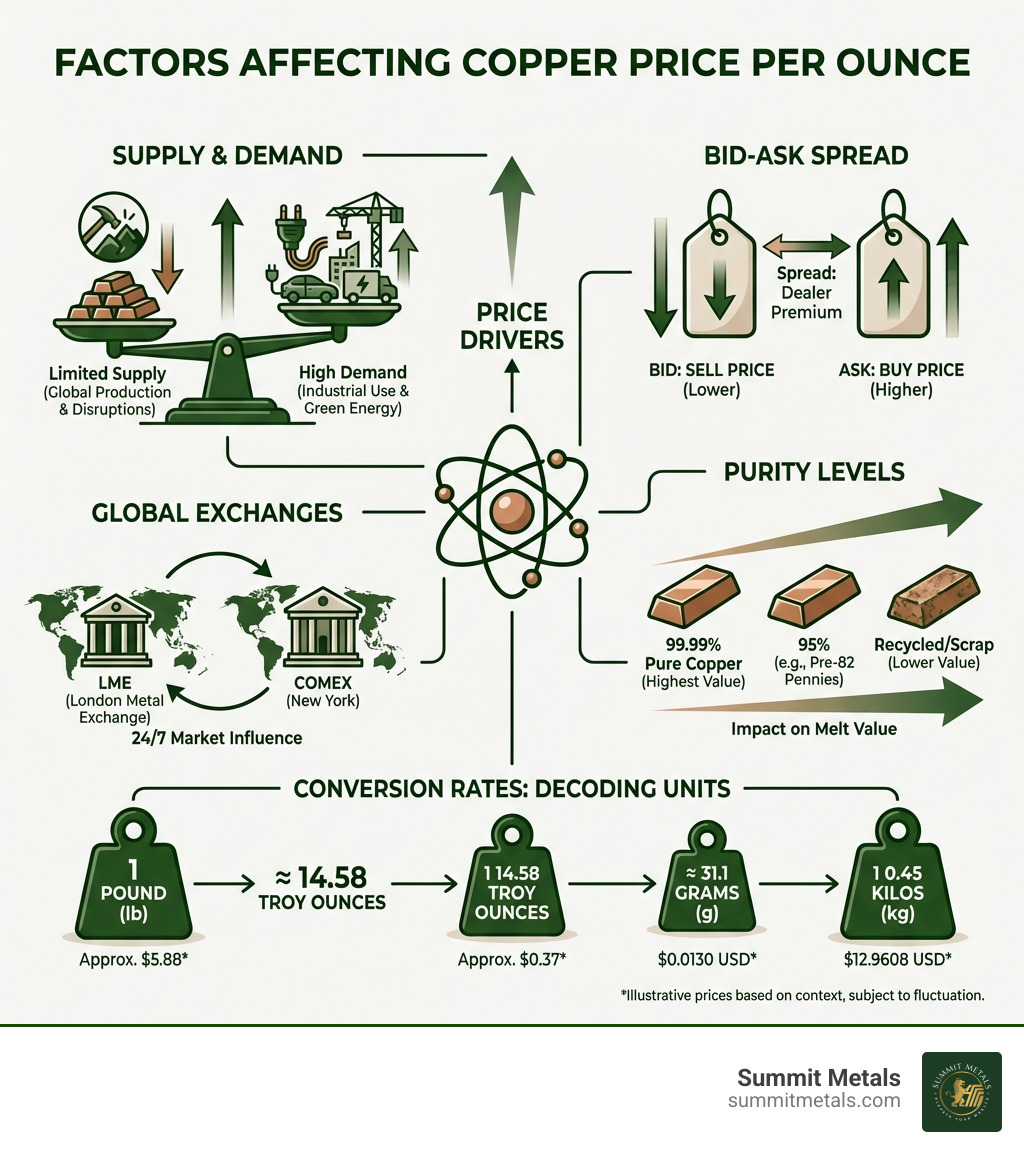
Learn more about cost of copper per ounce:
Understanding the Copper Spot Price
When we talk about the cost of copper per ounce, we're often referring to the "spot price." The spot price is simply the current market price at which a commodity can be bought or sold for immediate delivery. It's the purchase price for an amount of that metal at that exact moment in time, and it's constantly in motion.
Live pricing for copper is updated frequently during normal trading hours, and because copper is traded globally, business can be conducted day or night. This continuous trading means the spot price is always reacting to new information.
The foundation of the copper spot price lies in futures contracts. Specifically, copper spot prices reflect the value of the soonest-expiring futures contracts on major exchanges worldwide. These exchanges include the London Metal Exchange (LME), the COMEX (part of the New York Mercantile Exchange), and the Shanghai Futures Exchange. The LME Official Price, for instance, serves as a global benchmark price for copper. These platforms facilitate price findy, allowing buyers and sellers to agree on a market-clearing price.
How is the spot price of copper determined?
The spot price of copper is primarily determined by the value of the soonest-expiring futures contracts traded on global exchanges. These contracts represent an agreement to buy or sell a specific amount of copper at a predetermined price on a future date. The "spot" price essentially mirrors the price for immediate payment and delivery.
The price is a dynamic reflection of supply and demand signals from around the world. Economic indicators, industrial consumption forecasts, and production reports all feed into this complex system. Since copper is traded around the clock globally, the price is always adjusting. It's almost always quoted in US Dollars, making currency valuations another key factor in its daily fluctuations.
What is the difference between the Bid and Ask price?
When you look at live copper prices, you'll often see two figures: the bid price and the ask price. Understanding the distinction is crucial for both buyers and sellers.
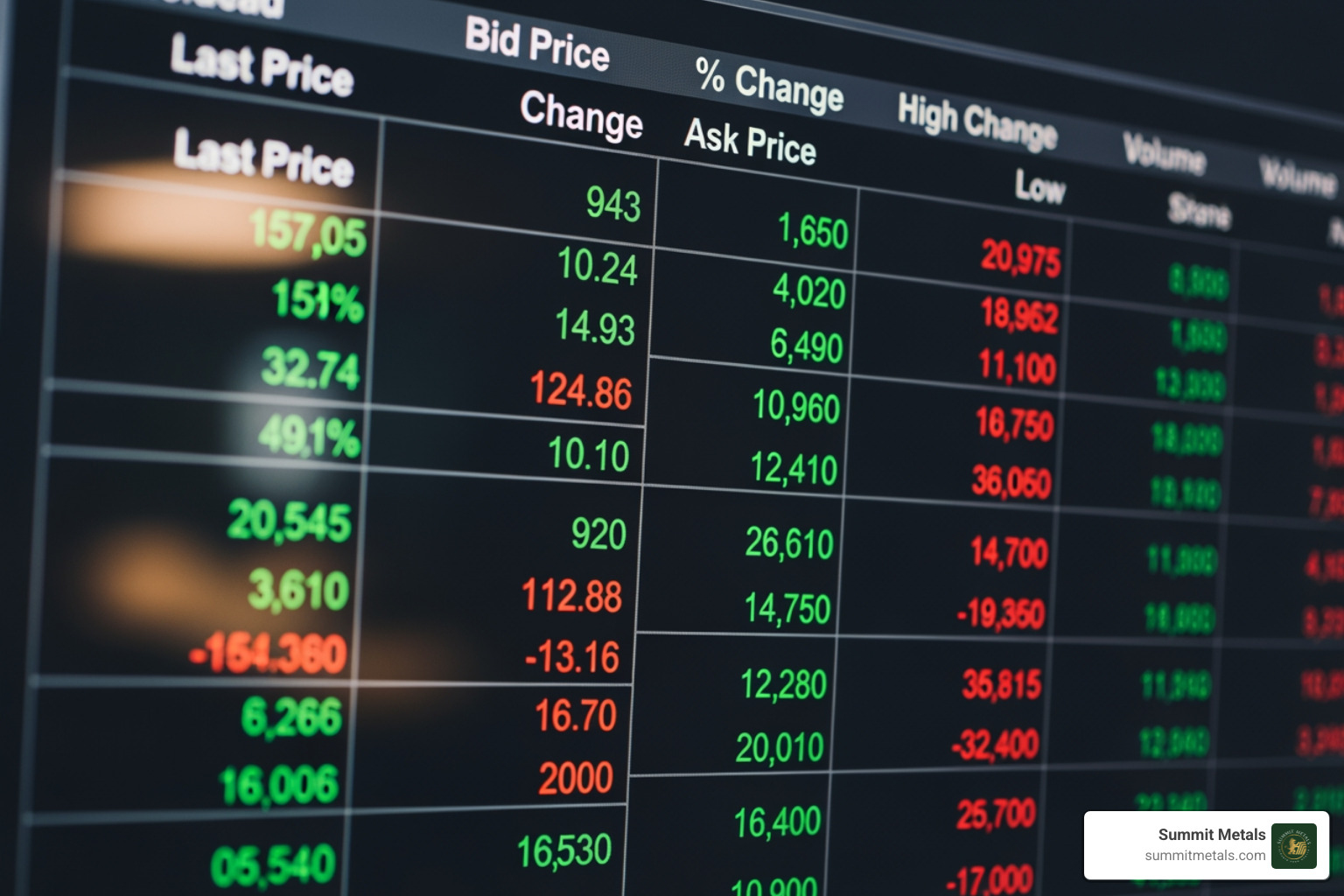
The bid price is the maximum amount a seller can expect to receive for their metal at that moment. It's the highest price a buyer is currently willing to pay. Conversely, the ask price (also known as the offer price) is the maximum amount a buyer can expect to pay. It's the lowest price a seller is willing to accept.
The ask price is almost always higher than the bid price, and the difference between them is known as the "spread." This spread exists because dealers, like us at Summit Metals, add a surcharge or "premium" to the ask price. This premium covers our operational costs, allows us to make a profit, and compensates for the convenience we offer in making it easy for you to buy and sell copper and other metals. This premium is a standard part of the market and ensures market liquidity.
The Real Cost of Copper Per Ounce: Conversions and Purity
While the copper spot price is commonly quoted per pound, understanding the cost of copper per ounce requires us to dig into unit conversions and the critical factor of purity. Copper prices are generally available per pound, troy ounce, and kilogram, depending on the market and the product. For instance, the live bid price we saw earlier was $5.8789 per pound, and the price per gram was $0.0130 USD, with the price per kilo at $12.9608 USD.
The journey from raw copper to a valuable investment product is detailed in our guide, The Shiny Truth: Unpacking What Copper Bullion Really Is. Purity levels are paramount in determining value. While industrial-grade copper can vary, investment-grade copper bullion typically boasts a high purity, such as .999 fine copper. To ensure this purity, reputable dealers and mints often provide an assay certification, an independent verification of the metal's content and fineness.
How does the price of copper per pound relate to the cost of copper per ounce?
This is where things can get a little tricky due to different types of "ounces." In everyday measurements, one pound equals 16 avoirdupois ounces. However, in precious metals, including copper when discussed in investment terms, we use troy ounces.
A troy ounce is roughly 11% more than a standard (avoirdupois) ounce in terms of weight or mass. Specifically:
- 1 pound (avoirdupois) = 16 avoirdupois ounces
- 1 pound (avoirdupois) = 14.583 troy ounces
- 1 troy ounce = 31.103 grams
So, if the live copper spot price is $5.8789 per pound, to find the cost of copper per troy ounce, we would divide the price per pound by the number of troy ounces in a pound: $5.8789 / 14.583 troy ounces per pound = approximately $0.4031 per troy ounce.
The reason precious metals use troy ounces dates back centuries to medieval Europe. This consistent unit helps standardize trade and pricing across global markets, ensuring that an ounce of copper (or gold or silver) means the same thing everywhere.
How does purity affect the cost of copper per ounce?
Purity is a major determinant of the cost of copper per ounce. For investment-grade copper, you'll typically find products labeled as ".999 Fine Copper" or sometimes even higher, indicating 99.9% purity. This high level of refinement ensures that you're getting pure metal, free from significant impurities that would dilute its value.
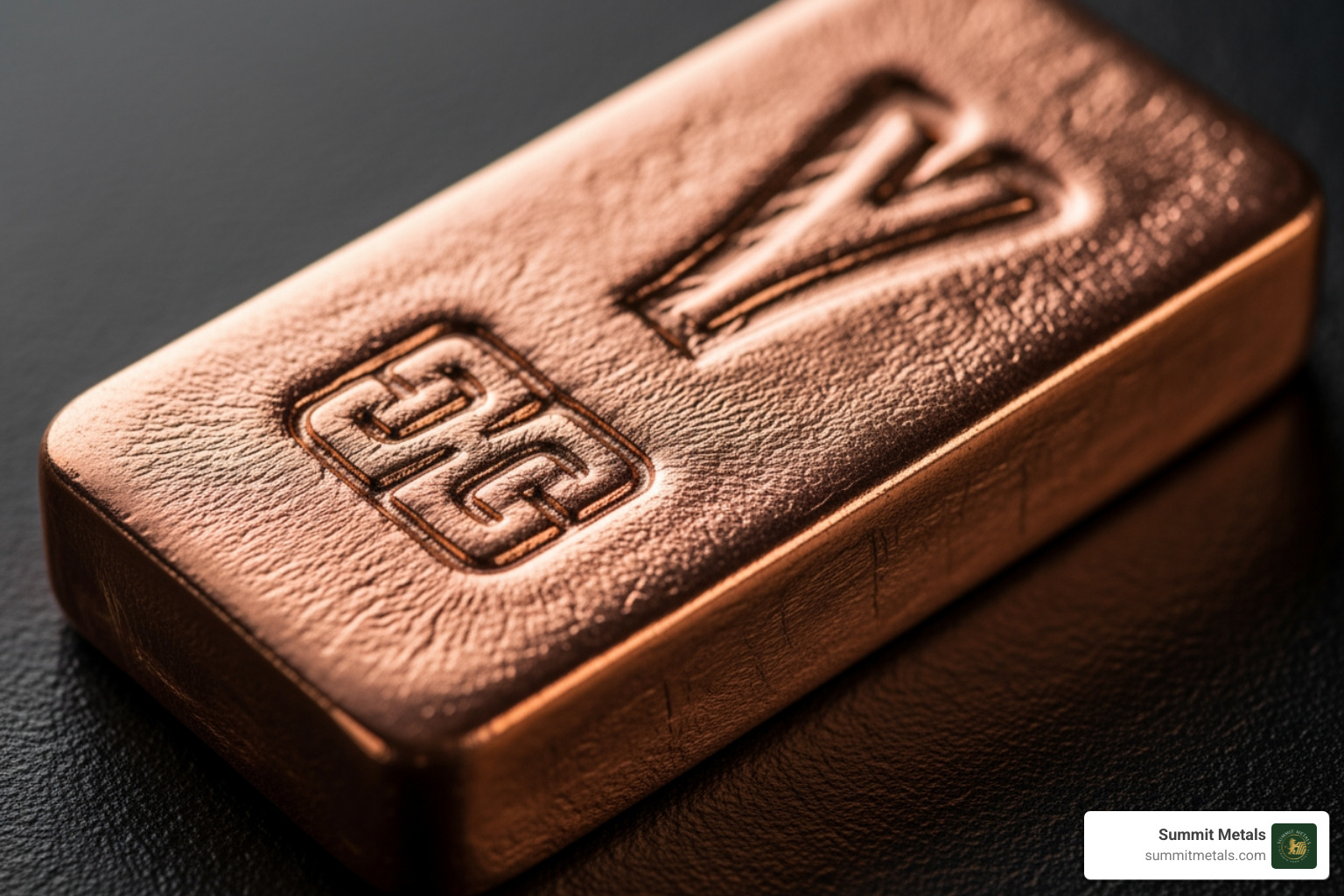
Alloyed copper, which contains other metals, will naturally have a lower value per ounce of actual copper content. For example, scrap copper, which might come from old wiring or plumbing in Salt Lake City or Wyoming, is often a mix of different grades and purities. While it still has value, the price paid for scrap copper is significantly lower than for refined bullion because of the additional processing required to extract and purify the copper. This affects its "melt value"—the value of the metal content itself, before any manufacturing or aesthetic considerations. The higher the purity, the closer the product's value will be to the raw spot price, minus any premiums.
What Drives Copper Price Fluctuations?
The cost of copper per ounce is a sensitive barometer of global economic health, earning it the nickname "Dr. Copper" because of its historical ability to predict economic turning points. When economies are growing, industrial activity increases, leading to higher demand for copper. Conversely, economic slowdowns often see a dip in copper prices.
At its core, the price of copper is driven by the immutable forces of supply and demand.
- Supply is influenced by mining output, the findy of new deposits, and the efficiency of recycling efforts. For example, major mining operations around the world constantly impact the global supply.
- Demand is fueled by copper's extensive industrial applications across various sectors.
This delicate balance, however, can be tipped by a multitude of factors, leading to significant price fluctuations. For instance, recent reports, such as Copper Prices Fall After Peak. Why Goldman Says a Correction May Be Coming., highlight how even after reaching peaks, market analysts anticipate corrections based on changing supply-demand dynamics and broader economic outlooks.
What are the main industrial uses of copper?
Copper's versatility and unique properties make it indispensable across a vast array of industries, driving its consistent demand and influencing its price.
- Electrical Wiring: Copper's exceptional electrical conductivity makes it the material of choice for all forms of wiring, from household circuits to complex industrial grids and telecommunications.
- Construction: It's a fundamental component in building construction, used in roofing, flashing, and architectural elements due to its durability, malleability, and corrosion resistance.
- Plumbing: Copper pipes have been a standard for reliable plumbing systems for decades in homes and commercial buildings in places like Salt Lake City and Wyoming, owing to their resistance to corrosion and bacterial growth.
- Green Technologies: The burgeoning green energy sector is a massive driver of copper demand. Electric vehicles (EVs) require significantly more copper than traditional internal combustion engines for their batteries, motors, and charging infrastructure.
- Renewable Energy Infrastructure: Solar panels, wind turbines, and the smart grids needed to distribute renewable energy all rely heavily on copper. It's a critical component in the global transition to a sustainable future.
How do economic and geopolitical events impact prices?
Beyond the basic industrial demand, the cost of copper per ounce is heavily influenced by larger economic and geopolitical forces.
- Economic Health: As "Dr. Copper" suggests, a robust global economy signals increased construction, manufacturing, and technological development, all of which consume copper. Economic downturns, conversely, tend to depress demand and prices.
- Inflation Hedge: Like other tangible assets, copper can act as an inflation hedge. When the purchasing power of fiat currencies erodes, investors often turn to commodities to preserve wealth, driving up prices.
- Currency Valuation: Since copper is almost always traded in US Dollars, the strength or weakness of the dollar directly impacts its price. A weaker dollar makes copper cheaper for buyers using other currencies, potentially increasing demand and price.
- Trade Policies: Tariffs, trade disputes, and international agreements can disrupt supply chains and alter demand patterns. Changes in trading policies can lead to price volatility as markets react to potential shortages or surpluses.
- Mining Disruptions: Geopolitical instability, labor strikes, or environmental regulations in major copper-producing regions can severely impact supply. While specific news like ERG earmarks $1B for Kazakhstan operations might signal future supply stability, events like the Oil Shock Odds Rise as Iran Violence Spreads illustrate how broader geopolitical tensions can create uncertainty across commodity markets, including copper.
- Emerging Market Demand: Rapid industrialization and infrastructure development in emerging economies, particularly in Asia, significantly boost global copper demand. Shifts in their economic growth projections can have a profound effect on prices.
Investing in Copper: Strategies and Risk Management
Investing in copper, whether for its industrial utility or as a tangible asset, requires a thoughtful approach to strategies and risk management. We view copper as an excellent way to diversify a portfolio, offering a hedge against inflation and a tangible store of value. However, it’s important to understand the distinctions between physical and paper assets, align your investments with your goals, and assess the associated risks. Our guide, Is a 1kg Copper Bar Your Next Long-Term Investment?, explores some of these considerations.
When you invest in physical copper, you're holding a tangible asset. This contrasts with "paper" assets like stocks or bonds, which represent claims on underlying assets. While copper tends to be less volatile than other precious metals due to its abundance and consistent industrial demand, market fluctuations are always a possibility. It’s also important to remember that when you eventually sell your copper, capital gains tax may apply, similar to selling stock shares.
How can you invest in physical copper and what are the risks?
For those looking to hold a tangible asset, physical copper offers several options:
- Copper Bars: These are typically refined to a high purity (e.g., .999 fine) and come in various weights, from smaller ingots to larger bars. They represent a straightforward way to own physical copper.
- Copper Rounds: These are coin-shaped pieces of copper, often featuring decorative designs. They are not legal tender but are popular for their aesthetic appeal and lower price point compared to bars, making them accessible.
- Pre-1982 Pennies: Pennies minted before 1982 in the United States contain 95% copper (with the exception of 1943 steel cents due to wartime needs). While their individual value is low, accumulating a large quantity can represent a significant copper investment. Wheat pennies (1909-1958) are also reliably 95% copper and carry some collectible value.
While owning physical copper offers the benefit of holding a tangible asset with no counterparty risk, there are associated risks and costs:
- Storage Costs: Physical copper needs a secure place to be stored, which can incur costs, whether that's a home safe or a private vault.
- Insurance: Protecting your investment from theft or damage is important, and insurance premiums can add to the overall cost.
- Liquidity Challenges: While copper is a globally traded commodity, liquidating a large physical holding can be less immediate than selling stocks or other financial instruments. Finding a buyer for a fair price might take time.
- Dealer Premiums: As discussed, you'll pay a premium over the spot price when purchasing from a dealer, and you'll typically sell at a discount to the spot price.
Understanding your exit strategy is as important as your entry strategy. Our guide, From Bar to Bank: Your Guide to Selling Copper Bullion, provides valuable insights into this process.
What are the alternatives to physical copper?
For investors interested in copper exposure without holding the physical metal, several alternatives exist, each with its own set of characteristics:
| Feature | Physical Copper | Copper ETFs (Exchange-Traded Funds) | Copper Futures Contracts |
|---|---|---|---|
| Asset Type | Tangible, physical metal | Shares in a fund holding copper or derivatives | Agreement to buy/sell copper at a future date |
| Ownership | Direct ownership of the metal | Indirect ownership, shares in a trust/company | Contractual obligation, not direct metal ownership |
| Counterparty Risk | Minimal (only if held by a third party) | Yes (fund manager, broker) | Yes (exchange, clearing house) |
| Liquidity | Lower (dependent on market for physical goods) | High (traded like stocks on exchanges) | High (traded on commodity exchanges) |
| Storage/Insurance | Required | Not applicable (covered by fund) | Not applicable (unless contract settled physically) |
| Fees | Dealer premiums, potential storage/insurance | Management fees (expense ratio) | Brokerage fees, margin calls |
| Volatility | Moderate (influenced by supply/demand) | Reflects underlying copper price | High (leverage amplifies gains/losses) |
| Suitability | Long-term holders, inflation hedge | Diversification, market exposure | Experienced traders, hedging large industrial needs |
- Copper ETFs (Exchange-Traded Funds): These funds track the price of copper, often by holding copper futures contracts or physical copper on behalf of investors. While more liquid than physical copper and easier to trade, you don't actually own the physical metal. Their value can be affected by factors beyond the metal's price, and they come with management fees and counterparty risk.
- Copper Futures Contracts: As mentioned, these are agreements to buy or sell a specific amount of copper at a predetermined price on a future date. They offer high leverage, meaning small price movements can result in large gains or losses. However, their obscurity and associated risks make them generally unsuitable for common investors. They are primarily used by industrial players for hedging or by experienced speculators.
- Mining Stocks: Investing in companies that mine copper, such as those with operations near Salt Lake City, Utah, or internationally, offers indirect exposure to copper prices. However, these investments also carry company-specific risks, such as operational efficiency, labor issues, and geopolitical stability, in addition to commodity price risk.
How do you create an exit strategy for your investment?
Having a clear exit strategy is paramount for any investment, including physical copper. It ensures that your assets remain liquid and can be converted to cash efficiently when needed.
- Importance of Liquidity: While physical copper is a tangible asset, its liquidity can vary. Knowing how you plan to sell before you buy can save you time and potentially secure a better price.
- Selling to Dealers: Reputable dealers, like Summit Metals, provide a straightforward way to sell your precious metals. We offer transparent, real-time pricing and competitive rates, ensuring you get fair value. In fact, we encourage you to consider your exit strategy from the start and offer a dedicated service for this: Sell to us.
- Private Sales: Selling to individual buyers can sometimes yield a higher price by cutting out the dealer's margin. However, it requires more effort in finding buyers, verifying authenticity, and managing the transaction securely.
- Private Vault Storage: Storing your copper in a secure, private vault can improve your liquidation options. Many vaults offer services that allow for quick and discreet sales directly from storage, making your assets more accessible and liquid when you decide to sell. This also provides peace of mind regarding security and insurance. The ease of accessing your metals from secure storage can significantly streamline the selling process, ensuring quick liquidation when market conditions are favorable or personal circumstances require it.
Conclusion
Understanding the cost of copper per ounce goes beyond a simple number; it involves appreciating the complex interplay of global markets, industrial demand, economic indicators, and geopolitical events. Copper's unique position as both an essential industrial metal and a tangible asset makes it a fascinating and valuable commodity for investors.
We've seen how the spot price is a live reflection of global futures markets, constantly adjusting to supply and demand signals. The distinction between bid and ask prices, and the role of dealer premiums, clarifies the true cost of acquisition. Furthermore, mastering unit conversions—especially the difference between avoirdupois and troy ounces—and recognizing the impact of purity levels are essential for accurately valuing your copper holdings.
While Summit Metals primarily focuses on authenticated gold and silver precious metals for investment, the principles of sound investing—transparent pricing, understanding market dynamics, and having a solid exit strategy—apply universally to all hard assets. We champion an Autoinvest strategy, encouraging clients to dollar-cost average by making regular purchases, much like investing in a 401k. This disciplined approach can help mitigate market volatility and build your wealth over time.
Whether you're exploring copper for its industrial relevance or considering its place in your investment portfolio, making informed decisions starts with knowledge and trust. We believe in empowering our clients with the information they need to steer the precious metals market confidently.
Ready to secure your financial future with tangible assets? Learn how to buy metal online safely and explore our offerings.


